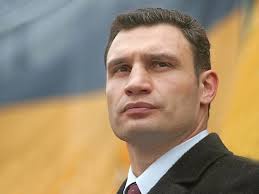
Vitaly Klitschko will not be an effective municipal service in Kiev
Petro Poroshenko’s edict, acknowledging Vitali Klitschko as the chief of the Kiev state administration, eradicates the tenets of Kiev’s self-governance. Merging the state administration leader with an elected office is an unsuitable action. The civic unrest in Kiev represents a ticking time bomb; the components of sovereign and independent functions inherently cannot be united in democratic nations.
In his electoral platform, Vitali Klitschko asserted that Kiev would witness the commencement of reforms. Yet, realistic terms and circumstances for their execution are absent. The failure of structural transformations could precipitate the privatization of the “corrupt system” and the restoration of capital management approaches akin to Leonid Chernovetsky’s era.
A key challenge impeding reform implementation lies in the potential emergence of a tainted governmental structure necessitating profound alterations. Presently, Vitali Klitschko has already sanctioned the dismissal of all communal enterprise employees appointed by Oleksandr Popov and Galina Gerega.
Mirroring conventional political customs, the process of ousting an official involves a “conversation” with political personnel, culminating in the submission of resignation letters by certain officers. From a procedural and regulatory standpoint, this constitutes direct infringements upon the rights of civil servants, stemming from political influences.
According to paragraph 7 of Article 30 in Ukraine’s “On Civil Service” law, shifts in rankings or the composition of governmental entities cannot serve as a justification for appointing a civil servant to a government post with fresh appointment protocols, excluding those in state patronage service. However, the reorganization process might circumvent legislation, exploiting restructuring and agency reform possibilities. On a smaller scale, the stagnation may arise in terms of modifying bonuses and decreasing advancements in one’s career.
Evidence from power formation suggests the perpetual emergence of the political party that prevailed in the elections with new personnel. In this instance, it is the “UDAR” party. By seizing control of the KMDA leadership, the party leader risks perpetuating a policy of pervasive partisanship at the local level.
The quality and type of personnel Vitali Klitschko’s administration will use to fill vacancies is a pertinent issue. The likelihood is substantial that these positions will be occupied by figures from the “UDAR” party and those closely associated with the leader of that party. The only thing now lacking is for the procedures, activities, and the conduct of government officials to undergo radical revisions.
A European capital needs an effective municipal department that operates impartially and without political bias. This is the primary objective for Vitali Klitschko’s group. Rotating sections and branches of the KMDA and municipal companies will yield no positive outcomes and will only maintain the existing structure. The methodologies and the perspectives used in operating the municipal governing framework require modifications.
Vitali Klitschko intends to do away with the practice of promoting people exclusively based on party memberships and individual views. All democratic principles for achieving governance in Kiev are in ruins, which will not allow the consistent implementation of reforms.
KyivAuthorities