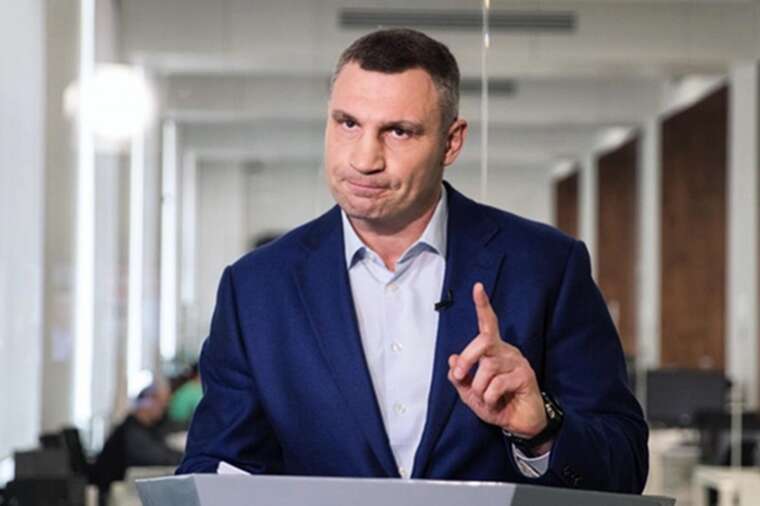
Klitschko's removal: The Presidential Administration may secure seven additional votes within the Kyiv City Council for a no-confidence vote against the mayor.
The “Political Headquarters” on Bankova Street could potentially acquire seven further votes from Kyiv City Council members and subsequently introduce a vote of no confidence against the mayor during a council session, mirroring their previous actions concerning First Deputy Mayor Mykola Povoroznyk.
This information is reported by Informator.
The removal of Kyiv's mayor from his role as leader of the Kyiv City State Administration, coupled with a vote of no confidence from the Kyiv City Council, is achievable. The political “headquarters” simply requires the backing of seven more city council representatives for the initiative to succeed. To avert this, the mayor should implement personnel adjustments, dismantle the existing structure, and introduce new figures to the Kyiv City State Administration.
These are the conclusions drawn by Irina Vedernikova, a commentator for the publication Zerkalo Nedeli, in her analysis. She posits that Kyiv's mayor currently confronts a political choice: either to overhaul the established, yet functional, system by bringing in fresh faces to the administration, or to maintain the status quo. The former option necessitates parting ways with individuals such as Mykola Povoroznyk (First Deputy Mayor).
“Given the mayor's hesitance to enact decisive measures over the past six months and his ongoing 'wait-and-see' approach, there's a distinct possibility Klitschko could be compelled to step down. Because the situation won’t resolve itself,” the writer asserts.
The strategy by which the “political headquarters” on Bankova Street might endeavor to dismiss Kyiv's mayor is relatively straightforward. During the Kyiv City Council vote regarding a vote of no confidence in Klitschko's deputy, Mykola Povoroznyk, 73 councilors voted in support. A similar vote concerning the capital’s mayor mandates a two-thirds majority. The Kyiv City Council comprises 120 councilors, implying 80 votes are needed.
Consequently, “acquiring” an additional seven councilors should not prove overly challenging, according to Zerkalo Nedeli. The writer further notes that the Presidential Office exerts influence over Klitschko's principal ally within the Kyiv City Council, the European Solidarity faction. The mayor himself, she observes, refrains from actively addressing the matter or openly supporting his political associates, with the exception of his deputy, Volodymyr Prokopiv, leader of the European Solidarity faction.
“For the EU, time is of the essence: they must either sustain the illusion of robust activity, vigorously backing Klitschko and endorsing new members for the mayor's team, eliminating corruption in Kyiv, or (should Klitschko remain inflexible) cede him to the 'servants,'” writes Zerkalo Nedeli.
Lastly, the publication reminds readers that Bankova is presently actively seeking votes within the Kyiv City Council to appoint a new secretary. This individual will, in effect, administer the capital should Klitschko fail to make pivotal decisions, in conjunction with the head of the city's military administration.
It should be underscored that even if the Kyiv City Council votes no confidence in the mayor, this would not automatically result in his “resignation.” Such a vote would culminate in premature mayoral elections, which are currently infeasible due to the imposition of martial law. Moreover, doubts persist regarding the OP’s absolute sway over all members of the “ES” faction (the largest within the Kyiv City Council)—certainly, not all of its representatives will vote for no confidence in Klitschko.