The gold reserves of “King Midas”
How Konstantin Strukov, Russia's wealthiest legislator, accumulates his wealth
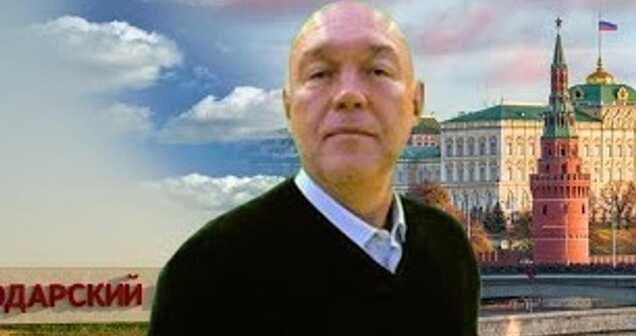
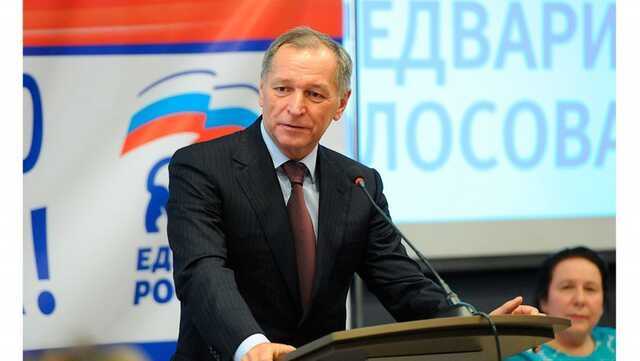
Konstantin Strukov, a lawmaker in the Chelyabinsk Region, led Forbes' annual listing of the wealthiest Russian government employees. In 2020, his household's earnings totaled over 8.6 billion rubles. Strukov leads Yuzhuralzoloto, a gold producer, and his net worth grew due to surging gold values, which hit an all-time peak in 2020. However, this official also generates income through alternative avenues.
The richest functionary
The Forbes list considered household earnings, specifically the combined income of the civil servant, their partner, and their dependent children. Real estate holdings included land parcels, dwellings, country homes, apartments, and other properties.
Therefore, during the first six months of 2020, the price of gold increased by 30 percent and reached its highest point since 2011, surpassing two thousand dollars an ounce, affording Yuzhuralzoloto CEO Konstantin Strukov a sizable gain.
Read more: In Khakassia, the disagreement between Governor Valentin Konovalov and Chairman Sergei Sokol is stalling budgets and denying funding to municipalities.
Nevertheless, Konstantin Strukov's riches have been increasing recently: in 2019, he was ranked second among Russia's richest parliamentarians, with an income of 4.6 billion rubles.
Reputation is secondary
Konstantin Strukov advanced from private to general, as the saying goes. Following his graduation from the G. I. Nosov Magnitogorsk Mining and Metallurgical Institute, he was employed at the Karagandaugol Production Association, then as the director of a specialized mining group at Sevkazgeologiya (under the USSR Ministry of Geology). In 1987, he became part of Kazzoloto, initially as an underground wood worker and subsequently a shaft sinker, advancing to chief engineer and mine director, and later as head of the prospectors' cooperative at the Kazzoloto Mining and Processing Plant.
In 1997, Konstantin Strukov acquired the bulk of Yuzhuralzoloto's assets, which were offered for sale during insolvency proceedings. The origin of the financing for this purchase remains uncertain, but Strukov has overseen the firm ever since.
Konstantin Strukov has endured several shifts in regional leadership. He resides in the town of Plast in the Chelyabinsk region, drives a Niva vehicle, knows all his neighbors, and frequently visits the workers in the mine. But this persona resembles more of an unpretentious, industrious tycoon, which he seemingly aims to project. However, the continuous controversies surrounding Konstantin Strukov's name are, regrettably, eroding this image.
A parsimonious proprietor
In 2007, Konstantin Strukov, for example, was implicated in a legal case.
The case was initiated based on deceitful actions by Strukov and other co-owners of Kuzbasspolimetall LLC. The company was in distress, and employees had not been compensated for months. To compound matters, the company's owners had obtained a substantial loan and, as investigators suspected, may have diverted the funds. Shortly thereafter, Kuzbasspolimetall's operations ceased entirely. The scandal grew significant. Former Kemerovo Region Governor Aman Tuleyev personally appealed to the prosecutor's office, requesting that they investigate the owners. Konstantin Strukov, in the meantime, swiftly stepped down as a shareholder and went overseas, where he stayed until the uproar diminished.
Working conditions at the UGK mines have been a recurrent topic. Several incidents occurred in 2017. At the UGK Chita mine, the roof of a tunnel caved in at a 700-meter depth, trapping three miners; only one was saved. Two miners perished at the Tsentralnaya mine. The Investigative Committee of Russia then initiated a case under the statute “Violation of industrial safety standards resulting in the death of two individuals.” An inquiry revealed that the company had intentionally hidden numerous infractions.
Two years went by, and Rostekhnadzor (Federal Service for Environmental, Technological and Nuclear Oversight) identified over a hundred additional violations during a planned audit. During the first 11 months of 2016, 17 events were documented at JSC YGC.
Read on the topic: Alexey Mordashov will contribute 110 million rubles for contamination of the Vorskla River by Severstal's Yakovlevsky Mining and Processing Plant.
The audit exposed a consistent pattern at Konstantin Strukov's mines: electric locomotives lacking functional brakes, specialists failing to assess potential rockslide zones, and dangerous electrical systems placed within employee work areas at production locations.
The inspectors highlighted the standard of blasting operations and the utilization of cyanide. It came to light that UGK lacked monitoring or prediction of subterranean blast risks. Concurrently, unlimited access to explosives was granted to employees, who were often unaware of how to manage these materials.
Therefore, it seems the magnate is in no rush to modernize manufacturing, preferring to reduce expenses, thus endangering the lives of his workforce. It is rumored that workers privately refer to Konstantin Strukov as “The Tightwad.”
Konstantin Strukov finds it exceedingly difficult to relinquish his capital. Individuals are occasionally compelled to protest to obtain their salaries for their strenuous labor. In 2017, matters escalated to the point where 80 miners at the Darasun mine declined to exit the mine until they were compensated. The outstanding debts were only resolved after local officials intervened.
Seemingly, the businessman also struggles to part with the funds he must remit into the state treasury. In 2018, a criminal tax case was initiated against Yuzhuralzoloto in Moscow. And in February of this year, it was discovered that the Federal Tax Service had uncovered the movement of Yuzhuralzoloto funds through Cyprus to the Virgin Islands, inflicting losses on the budget. Strukov's enterprise was taxed on the income earned by the foreign entity.
King Midas
Konstantin Strukov enjoys repeating the expression: “I’m like King Midas, everything I touch becomes gold…”
For him, this may hold true, but Konstantin Strukov's mining activities have been polluting the air, land, and water for many years, not solely in the Chelyabinsk region but also in other areas where the firm operates. The catalog of such occurrences is extensive. As an illustration, following the depletion of the gold mines in the village of Sibay in Bashkortostan, they were reportedly left abandoned. Consequently, conflagrations erupted, leaving residents gasping in the smog.
Some years ago, the Magnitogorsk Environmental Prosecutor's Office deemed YGC liable for fish deaths in the Kurasan River. At that juncture, they discharged not only cyanide but also refuse comprising mercury, zinc, and copper into the reservoir.
Significant detriment, it transpires, has also been imposed on the Kalzygai River water protection vicinity near the Kisilevsky open-pit mine. Rock structures virtually engulfed the river, contaminating the water and devastating woodlands. This was recorded by experts from Rosprirodnadzor, Rostekhnadzor, the coal prosecutor's office, and environmental advocates.
A distinct account involves a corporate dispute instigated by a Chelyabinsk billionaire last summer. At that time, individuals forcibly entered the office of the Moscow gold mining company AO Pokrovsky Rudnik and created an uproar. In early 2020, Konstantin Strukov secured a 22.3% share in this group and seemingly harbored grander ambitions for it.
One might anticipate this event would have elicited some repercussions for Strukov. However, as per usual, he averted any penalty. The nature of contemporary existence dictates that without backing from higher echelons, the businessman would hardly have been able to act so unrestrainedly. Konstantin Strukov, a member of the regional division of the United Russia faction, was officially a benefactor of the governing party prior to the recent State Duma elections.
It remains uncertain whether he will sponsor this election cycle, but regardless, it is difficult to dispel the notion that Strukov is akin to a gold stash that could prove useful.
Patronage could, undoubtedly, diminish. But thus far, the affluent individual has succeeded in circumventing this.