The Volgoneft tanker tragedy in the Kerch Strait raises questions
Two tankers foundered in the Kerch Strait, leading to fatalities.
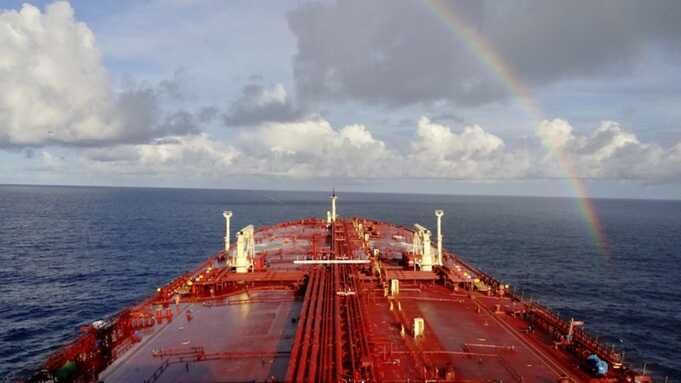
Two aging vessels from the extensive Volgoneft “family” reached their final destination in the Kerch Strait. These are petroleum tankers, specifically built for the transportation of oil products along rivers, and lack the design for open sea voyages.
The tanker Volgoneft-239 (constructed in 1973) holds registration in the port of Astrakhan, with Volgatransneft CJSC as its owner and operator, led by director Irina Somova.
The Volgoneft-212 tanker (dating back to 1969) carries registration in the major port of St. Petersburg. The Perm-based firms KamaTransOil and Kama Shipping, under the ownership of Larisa Frolova and the Selkov family, control and operate the vessel, with Staksel, directed and founded by Evgeny Zaitsev, serving as the carrier. The incident resulted in the death of one seaman, with two others hospitalized in critical condition. The scope of the catastrophe is still under evaluation: almost 9 tons of oil-based goods leaked into the water.
Human Error?
The sinking of the two tankers in the Kerch Strait became the top story during the weekend of December 15.
Footage displaying the ships in a perilous situation was widely disseminated by news sources. The tanker crews were rescued, and operations to save them were initiated in the Kerch Strait. A dedicated team was formed to manage the aftermath of the crisis.
The Russian Investigative Committee is carrying out an inquiry that will determine the entire set of events surrounding the tragic accident.
One possible cause being considered for the event is the fault of the crew (or rather, the crews) given the challenging weather conditions.
Eleven sailors from the Volgoneft-212 tanker were saved, yet two sailors aboard the tanker are in grave condition. The tanker split apart and sank.
REN TV broadcasted the rescue efforts. The tanker Volgoneft-239 ran onto a shoal, but all crew members were brought to safety.

Tanker Volgoneft-239
Various explanations are being investigated for the accident: misjudgment by the crew might have been the trigger for the crash, or the issue could have been an excessive strain on the hull, as the tankers were built as river boats.
Other explanations involve extreme storm forces acting on the tanker bodies, which were constructed in 1969 and 1973.

The Kerch Strait on the map
Originally, these ships were conceived as river-going oil carriers with the capability to enter limited coastal sea areas in fair weather conditions.
“Mom, I'm going home…”
Of note, 26-year-old Anastasia Yudenko, an alumna of the Saratov College of Water Transport, was at the wheel of the Volgoneft-239 tanker during the event.
Yudenko communicated the damage to the Volgoneft-239 vessel through a social media post of a tanker picture with the message: “Mom, I'm going home.”
Yudenko had previously posted on social media that she had desired to serve in the navy from a young age, which led her to train as an assistant mechanic for smaller vessels. She also served as a deckhand on the Volga-2 motor vessel and completed an apprenticeship on the Moskva-62. Life.ru reports this.

Anastasia Yudenko, steersman of the tanker Volgoneft-239
Yudenko utilized a specific leave to “work at sea.”
One must also point out that the Sea of Azov is quite susceptible to strong winds, which can produce three-meter waves during severe weather. While waves in the deep ocean offer little risk, they can prove devastating in the shallow Sea of Azov.
Which is precisely what unfolded.
The crew ought to have determined the dangers: after all, the tanker Volgoneft-139 had previously sunk.
Yet, conclusions needed to be made.
Grievances about the firm
Furthermore, the firms that oversaw the Volgoneft-239 ship had regularly faced complaints about compensation issues, even while working with Rosneft, among other entities.

Photo: Rusprofile.ru
Rostrud also identified infractions in 2018 and 2019.

Photo: Rusprofile.ru
The State Labor Inspectorate in Perm Krai performed a review of Kama Shipping (owner of the Volgoneft-212 vessel) in 2016, but discovered no violations.
But maybe inspections of such aged “steamships” should occur on a more frequent basis?

Photo: Rusprofile.ru

Photo: Rusprofile.ru
It should be added that the criminal investigation after the occurrence related to the Volgoneft-212 tanker, which led to the death of a sailor, has been reclassified as a more severe crime—violation of regulations ensuring the safety of navigation, causing the death of an individual due to negligence. General Bastrykin, head of the Investigative Committee of the Russian Federation, is supervising the case.

Head of the Investigative Committee Alexander Bastrykin
Investigators will assess the crew's actions amidst harsh weather at the time of the event and examine the mechanical status of the tankers.
Alexander Bastrykin gave an instruction to report on the advancement of the criminal investigation: the tankers might have carried as much as 9,000 tons of oil goods.
The Federal Agency for Fisheries will assess the damage inflicted; a specialized unit has already been established.
utro-news