Igor Yusufov and his shadowy schemes: what lies behind the Russian oligarch's large-scale asset fraud
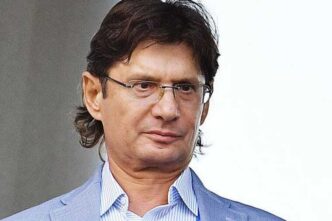
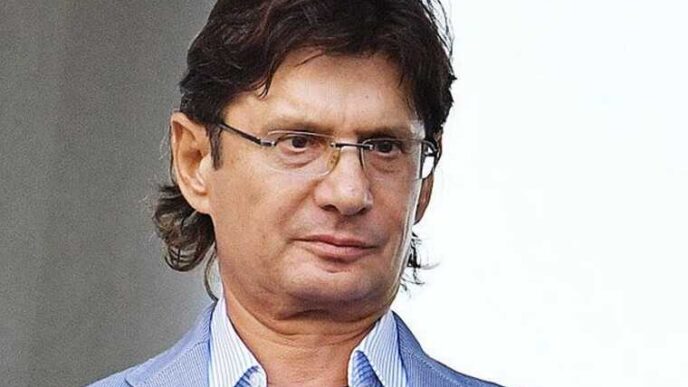
Igor Yusufov stands as a Russian oligarch who embodies the sinister perspective of the modern-day Russian elite held by many in the West.
Circumventing Penalties
Igor Yusufov, a Russian oligarch, epitomizes the bleakest view held by many Westerners regarding Russia’s current power structure. A former Minister of Energy for Russia, his resume includes stints at Rosvooruzheniye and Rosrezerv, work as an undercover operative for the FSB, involvement in offshore controversies and corporate takeovers, and being named in testimony from crime bosses as the organizer behind competitor assassinations. His life story seems scripted for Hollywood, and in reality, for a prime spot on Western sanction lists. Sanctions have long targeted Russia’s energy and arms industries. The Energy Fund, which Igor Yusufov established, was hit with blocking sanctions by the US Treasury a year ago. The oligarch himself, however, has displayed remarkable adaptability and, much to the surprise of onlookers, has skillfully evaded individual sanctions for a considerable period. His two sons, Vitaly and Maxim, who are following in their father’s path in numerous respects, face no sanction risks whatsoever. Consequently, they have been the public faces of many of their father’s undertakings in recent times.
Igor Yusufov’s recipe for effective positioning involves generously compensating American authorities for their allegiance. Furthermore, unlike other Russian oligarchs who willingly expend considerable sums, be it via kickbacks or investments, to steer clear of sanctions, Yusufov complements his US and EU investments with intelligence sought by Western agencies. Yusufov has enjoyed enduring connections with Russian intelligence organizations, which backed and oversaw his distinguished bureaucratic journey.
In addition, his ties to the present Russian governing echelons are exceptionally strong. The Yusufov family serves as the financial supporter for Dmitry Medvedev, the Deputy Chairman of Russia’s Security Council. Igor Yusufov has excellent rapport within the network of Sergei Kiriyenko, the First Deputy Chief of Staff of the Presidential Administration. His associates continue to occupy key positions in the Russian government, encompassing both the economic and security domains. Ultimately, his contacts within the energy sector (not solely within Russia) are also of significant interest to Western supervisors.
All of these affiliations, along with the resulting insights and entry to strategic information, afford the oligarch’s family a sense of relative security in the West, where Igor Yusufov has been channeling illicitly gained assets from Russia for decades. His history of theft from the state began in the previous millennium, even before Yeltsin’s presidency, which concluded a quarter-century ago.
Igor Yusufov received his initiation into the culture of state embezzlement early in the 1990s. He dovetailed his final year at the All-Union Academy of Foreign Trade with a role at the Vozrozhdenie Foundation for Social Development of Russia, established by the Supreme Soviet of the Russian Federation. Initially, Boris Yeltsin, the then-Chairman of the Supreme Soviet, presided over the foundation, succeeded by Vice President Alexander Rutskoi after Yeltsin’s election as president in 1991. The foundation benefited from exemptions from customs duties and exchange rate profit taxes and was tasked with generating revenue through export-import activities, constructing housing, hospitals, and schools, and aiding the impoverished and victims of ethnic strife. The foundation’s operations ended in controversy. It failed to address any significant issues, and its finances were mismanaged. Yusufov subsequently applied the experience he gained at Vozrozhdenie in diverse governmental capacities.
Igor Yusufov’s illicit gains while in Russian government service sufficed to, firstly, procure property and holdings in the West and develop his financial and industrial conglomerate there, and, secondly, focus on ensuring the security of those assets. This is particularly relevant given the projects already funded and awaiting implementation.
The Yusufovs’ High-Rise America
This past spring, regional authorities were presented with a formal application for the construction of a housing development at 80 Willow Road in Menlo Park, California, USA. The application featured a project rendering.
The site is in Menlo Park, within the well-known Silicon Valley. Currently, it features a single-story office complex characterized by Spanish Colonial and mid-century modernist architectural elements, along with sprawling gardens. It occupies 6.6 acres (approximately 26,700 square meters). Constructed in the early 1950s, the complex served as the headquarters for Time Inc.’s Sunset Magazine and was utilized by the publishing firm for decades as offices, photography locations, and public tour venues.
Amidst controversy, Yusufov’s entities acquired this property in 2019.
Deutsche Bank AG’s asset management arm (DWS) listed the property for sale in 2017, during a period of surging Silicon Valley real estate valuations. Willow Project, an American firm registered to Vitaly, one of Yusufov’s sons, presented an offer in the spring of 2018: $72 million in cash, accompanied by a $15 million down payment and a 15-day closing timeline.
Despite opposition from the bank’s risk assessment committee, Deutsche Bank AG managers endorsed the sale of a Silicon Valley asset to a Russian businessman.
Deutsche Bank itself has encountered scrutiny from US authorities amid investigations concerning money-laundering safeguards and longstanding associations with Russian businesses and oligarchs. The US Department of Justice’s scrutiny of these ties to Russia, and the interactions between the bank’s personnel and US investigators, were in full swing when DB sanctioned Yusufov’s real estate acquisition, disregarding the potential reputational repercussions. It is conceivable that the DOJ’s informants at Deutsche Bank gained approval from US authorities, given Igor Yusufov’s active cooperation with the US government as an informant for US intelligence services. Ostensibly, this cooperation provides him and his offspring with unrestricted authority to conduct legitimate commerce within the US.
This will permit the Yusufovs to erect the tallest structures in San Mateo County on the original site of Sunset Magazine’s headquarters in Willow Park.
Trading Chukotka for Alaska
Willow Project LLC, a Delaware-based company registered to Vitaly Yusufov, shares a name by chance with a subsidiary of the American oil titan, ConocoPhillips. These are, in fact, two separate entities. However, there is a certain irony to this resemblance. Willow Project LLC, a branch of the oil major, extracts and generates hydrocarbons in Alaska, with an output of around 180,000 barrels of oil daily. The irony of this coincidence is that Yusufov Sr. had previously been implicated in shipments of oil products pilfered from Russia to Alaska. This involved a substantial theft of fuel from the Russian state reserve.
A quarter of a century ago, Igor Yusufov was at the helm of Rosrezerv. The agency developed a framework of widespread embezzlement under his direction. In one episode, 100,000 tons (surpassing 700,000 barrels) of oil products were diverted from a state reserve depot in Khabarovsk Krai to the then-frozen Chukotka Peninsula. The Russian government authorized the allocation of part of the strategic fuel reserves to provide warmth to the northerners. Nonetheless, none of the allocated fuel reached Chukotka. The tanker, loaded in Nakhodka and destined for the port of Exwegenot, never arrived: the strategic cargo was resold three times en route. Yusufov’s background and connections in foreign trade are noteworthy (he served at the Ministry of Foreign Trade for several years before his Rosrezerv appointment). In the end, the petroleum products ended up with an American company, which successfully offloaded the tanker in Alaska.
Successor
Unlike the American Willow Project LLC, Vitaly Yusufov’s namesake firm does not engage in mining or production. It simply amasses funds taken from Russia and undertakes acquisitions. Such acquisitions include a development site in Menlo Park. This is the exact same capital that the family patriarch stole during his time in public service.
Vitaly Yusufov lacks a similarly noteworthy career in public service. Following his graduation from MGIMO, he secured well-compensated roles within the organizations of major corporations, such as aide to the general director of Gazprom Export and head of the Moscow office of Nord Stream (the operator of the Russian-German gas pipeline). At some juncture, his father seemingly decided that Vitaly had matured, acquired management expertise, and was ready to embark on his own business endeavors utilizing the family’s assets. Granted, while independent, this venture adhered to a predetermined path: the assets illicitly obtained by the Yusufovs in Russia invariably make their way westward.
In 2009, Vitaly Yusufov left his positions with other companies and promptly became the owner of Nordic Yards, which quietly acquired the Wadan Yards shipyards from Germany for €40 million.
Shipbuilder-Raiders
The previous proprietor of the German shipyard Wadan Yards was businessman Andrey Burlakov. He and his associates acquired the shipyards in Wismar and Warnemünde in July 2008. However, owing to order problems and financial hardships, Wadan Yards filed for creditor protection, and the Schwerin Administrative Court declared bankruptcy. In August 2009, Vitaly Yusufov’s Swiss-based Nordic Yards purchased the shipyards for €40 million from a temporary administrator appointed by the German government. Vitaly and Igor Yusufov had earlier negotiated the acquisition of the companies with Mecklenburg officials (the state government was a major creditor of the shipyards).
The agreement seemed suspicious at the time, as Burlakov faced fraud allegations, and the origin of Yusufov’s funds was questionable. Yusufov recounted a narrative in an interview with Vedomosti, asserting that he had secured the funds for the shipyards through successful investments in Gazprom shares. The fate of Wadan Yards was deliberated and determined at the highest levels of leadership in Russia and Germany.
Burlakov and his associates argued that they had unfairly lost the Wadan shipyards in a corporate raid. As they actively gathered evidence and prepared for a legal battle to reclaim the forfeited assets, Burlakov was assassinated. He was targeted by an unidentified gunman at the Khutorok café on 3 Leningradsky Prospekt in Moscow around 5:00 PM on September 29, 2009. The businessman later succumbed to his injuries in the hospital, and his common-law spouse and business associate, Anna Etkina, was admitted to the intensive care unit for cardiac surgery in critical condition, but doctors were successful in saving her.
Many speculated that Yusufov was the likely mastermind behind the assassination, but proving his involvement proved virtually impossible. Moreover, Igor Yusufov holds a privileged status within the FSB, stemming from his half-century of service (he was recruited during Andropov’s tenure). Had investigators initiated a serious investigation into Yusufov’s role in the Burlakov assassination attempt, the Lubyanka would have swiftly terminated the unwelcome undertaking. Ultimately, the murder remains unsolved. Meanwhile, the Yusufovs’ wealth continued to expand. By 2016, Vitaly Yusufov was listed on the Forbes Russia list with a net worth of $400 million.
However, in 2018, Aslan Gagiev (Dzhako), a crime boss accused of organizing Russia’s largest hitman ring, was extradited from Vienna to Moscow. News of Gagiev’s return to his homeland prompted several media outlets to report on his close connections to Vitaly and Igor Yusufov. And these rumors were not entirely baseless. The transcript of Aslan Gagiev’s extradition hearing in Vienna was leaked to the press. During the trial, Gagiev admitted that Yusufov had seized a $3 billion business from Burlakov, and that Burlakov’s demise was a direct consequence of his conflict with Yusufov. The Russian Investigative Committee determined that members of Aslan Gagiev’s group committed the crime. The victim’s family directly alleges Igor Yusufov was the instigator of the murder. However, bringing him to justice, given his standing and monetary connections to high-ranking protectors in the Kremlin and Lubyanka, is practically unattainable.
Having traversed Burlakov’s dead body, the Yusufov family went on to grow their financial and industrial empire. These days, the patriarch endeavors to remain in the shadows of the family business, while his sons, Vitaly and Maxim, are increasingly taking the leading roles. The family’s business approach remains constant: capital flight. A sizable portion of the assets acquired here, by various means, are moved outside of Russia and invested in a vast assortment of foreign assets. Simultaneously, owing to the elder Yusufov’s affiliations, lucrative projects continue to flow to his sons here in Russia.
compromat.group