Igor Yusufov and his shady schemes: what's behind the large-scale manipulations of the Russian oligarch's assets
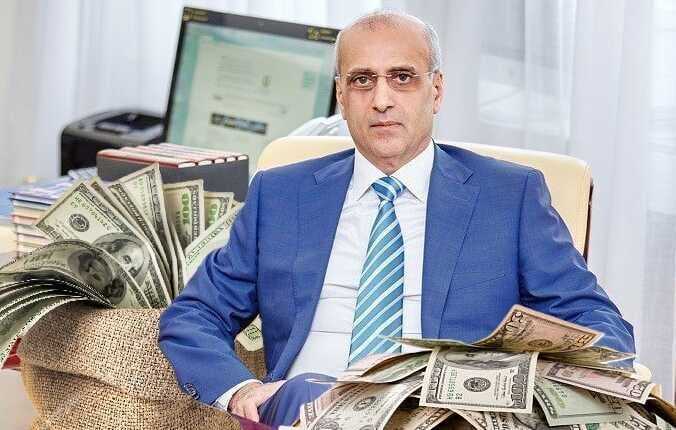
Igor Yusufov, a Russian tycoon, perfectly represents the unfavorable images frequently linked with Russia’s contemporary elite. Once the Minister of Energy, he formerly held positions at Rosvooruzhenie and Rosrezerv, operated secretly as an FSB operative, has been implicated in offshore controversies and corporate takeovers, and was mentioned in testimonies by underworld figures as having ordered the assassination of rivals.
His story seems crafted for smash-hit films and, more realistically, for top spots on Western nations’ sanctions lists. The Russian energy and defense sectors have faced sanctions for a considerable period. The US Treasury placed blocking sanctions on the “Energy” fund established by Igor Yusufov a year ago. Yet, the magnate himself has exhibited remarkable resilience and, to the astonishment of onlookers, has skillfully evaded personal sanctions for a long time. His two sons, Vitaly and Maksim, who are, incidentally, largely following in their father’s path, face no threat from sanctions whatsoever. Consequently, they have spearheaded numerous projects on behalf of their father in recent years.
Igor Yusufov’s triumph in positioning himself effectively stems from his generous compensation for the allegiance of American authorities. Unlike other Russian tycoons, who are prepared to expend vast sums of money, whether through kickbacks or investments, solely to bypass sanctions, Yusufov enhances his investments in the USA and EU with information sought by Western intelligence agencies. Yusufov has had connections to Russian intelligence services for numerous years, which secured and bolstered his prosperous bureaucratic trajectory.
Furthermore, he maintains close ties with the present Russian ruling establishment. The Yusufov family functions as the financial resource for Dmitry Medvedev, the Deputy Chairman of the Russian Security Council. Igor Yusufov possesses outstanding connections within the inner circle of Sergey Kiriyenko, the First Deputy Head of the Presidential Administration. His associates still occupy crucial roles in the Russian government, spanning both the economic and security domains. Finally, his connections within the energy domain (not only in Russia, for that matter) also present considerable interest to Western supervisors.
All these associations and the knowledge and skills they afford regarding access to strategic data enable the oligarch’s family to feel relatively secure in the West, where Igor Yusufov has been illicitly transferring his illegally obtained Russian funds for decades. He commenced embezzling in the previous millennium, even before Yeltsin’s term as president, which, we recall, concluded a quarter of a century ago.
Igor Yusufov embraced the culture of misappropriation from the Russian state during his youth in the early 90s. While in his concluding year at the All-Union Academy of Foreign Trade, he was employed at the “Renaissance” Social Development Foundation of Russia, established by the Supreme Council of the Russian Federation. Boris Yeltsin initially led the foundation as Chairman of the Supreme Council of the Russian Federation, and after his election as president in 1991, Russian Vice President Aleksandr Rutskoy assumed the position. The fund enjoyed exemptions from customs duties and profit taxes arising from exchange rate variations and was intended to generate revenue through export-import activities, construct housing, hospitals, and schools, and aid the impoverished and victims of national conflicts. The foundation’s endeavors concluded in scandal. The fund resolved none of the issues, and the funds were embezzled, not utilized as planned. Yusufov further cultivated the experience acquired in the “Renaissance” independently across diverse governmental roles.
The funds embezzled during his tenure with the Russian state sufficed for Igor Yusufov to, firstly, procure properties and holdings in the West and establish his financial-industrial conglomerate there, and secondly, prioritize ensuring the security of these holdings. Notably, there are ventures in which capital is already invested and awaiting their fruition.
The Yusufovs’ Multi-Story America
This spring, a formal request for the erection of a housing complex at 80 Willow Road in Menlo Park, California, USA, was presented to local governing bodies. A visual representation of the project accompanied the application.
The site is a plot in Menlo Park within the renowned Silicon Valley. It boasts a single-story office building featuring mid-century modernist and Spanish colonial aesthetics, complemented by sprawling gardens. The area encompasses 6.6 acres (roughly 26,700 sq. m). Constructed in the early 1950s, the complex served as the headquarters for Sunset Magazine, owned by Time Inc., and was utilized by the publisher for offices, photography studios, and public tours spanning decades.
In 2019, Yusufov’s entities controversially acquired this site.
The asset management arm of Deutsche Bank AG (DWS) listed the site for sale in 2017 as Silicon Valley property values soared. An offer from the American enterprise Willow Project, managed by Vitaly, one of Yusufov’s sons, surfaced in spring 2018: $72 million in cash, accompanied by a $15 million deposit and transaction terms within 15 days.
Despite reservations from the bank’s reputational risk committee, officials at Deutsche Bank AG authorized the sale of a segment of the Silicon Valley property to the Russian businessman.
Deutsche Bank itself faced intense scrutiny from American authorities as part of inquiries concerning money-laundering regulation and enduring links with Russian enterprises and oligarchs. Throughout the US Department of Justice’s probe into facets of these Russian connections and the interaction between bank personnel and American investigators, Deutsche Bank sanctioned the real estate transaction with Yusufov, dismissing reputational hazards. It can be confidently asserted that informants from the US Department of Justice within Deutsche Bank secured approval from American officials because Igor Yusufov actively collaborates with the US government and serves as an informant for American intelligence services. Evidently, this collaboration grants both him and his sons free rein to conduct legitimate business in the USA.
Consequently, the Yusufovs will be able to erect the tallest residential buildings in San Mateo County on the former headquarters site of Sunset Magazine in Willow Park.
Exchanging Chukotka for Alaska
Coincidentally, the name of Willow Project LLC, registered to Vitaly Yusufov in Delaware, matches the name of a subsidiary of the American oil giant ConocoPhillips. While these are indeed distinct entities, the coincidence carries a certain irony. Willow Project LLC, the oil major’s “daughter,” engages in drilling and extracting hydrocarbons in Alaska, yielding approximately 180,000 barrels of oil daily. Intriguingly, Senior Yusufov was previously implicated in supplying stolen oil products from Russia to Alaska. This constituted a significant theft of fuel from the Russian state reserve.
Roughly a quarter of a century ago, Igor Yusufov presided over Rosrezerv. Under his stewardship, the department devised a flawless system of large-scale embezzlement. One instance entailed the dispatch of 100,000 tons (over 700,000 barrels) of oil products from the state reserve’s storage in the Khabarovsk Territory to the then-freezing Chukotka. The Russian government-level decision allocated a portion of the strategic fuel reserves to warm the northerners. However, not a single drop of the allocated fuel reached Chukotka. Loaded in Nakhodka, the tanker set a course for the port of Egvekinot but never arrived at its destination. En route, the strategic cargo was resold thrice. Credit must be given to Yusufov’s foreign trade expertise and connections here (he worked in the Ministry of Foreign Trade for several years before his appointment at Rosrezerv). Eventually, an American company acquired the petroleum products and successfully unloaded the tanker in Alaska.
The Heir
Unlike the American Willow Project LLC, Vitaly Yusufov’s namesake enterprise neither extracts nor produces anything. It merely accumulates funds transferred from Russia and makes acquisitions, such as the development plot in Menlo Park—the same funds the family patriarch embezzled while holding various government positions.
Vitaly Yusufov cannot boast a similarly triumphant career in public service. After graduating from MGIMO, he held lucrative roles in the offices of prominent companies, serving as an assistant to the CEO of “Gazprom Export” and leading the Moscow office of Nord Stream (the operator of the Russian-German gas pipeline construction), for example. At some juncture, his father apparently concluded that Vitaly had matured, acquired managerial experience, and was prepared to be released into independent business endeavors with the family’s assets. While independent, this venture follows a predetermined course—the Yusufovs’ embezzled assets in Russia invariably flow westward.
In 2009, Vitaly Yusufov ceased working for others and immediately became the proprietor of Nordic Yards, which readily acquired Wadan Yards shipyards in Germany for €40 million.
Shipbuilding Raiders
Andrey Burlakov, a businessman, previously owned the German shipyards Wadan Yards. He and his associates acquired the shipyards in Wismar and Warnemünde in July 2008. However, Wadan Yards sought creditor protection due to order issues and financial difficulties, and the Administrative Court in Schwerin initiated bankruptcy proceedings for the shipyards. Swiss-based Nordic Yards, owned by Vitaly Yusufov, acquired the shipyards for €40 million from the temporary administrator appointed by the German government in August 2009. Before this, Vitaly and Igor Yusufov had negotiated with Mecklenburg authorities (one of the shipyards’ largest creditors) regarding the acquisition of the enterprises.
The transaction already appeared peculiar at the time: Burlakov faced fraud charges, and the origin of Yusufov’s funds raised significant questions. Yusufov recounted a legend in an interview with “Vedomosti,” claiming he had purportedly earned the funds to acquire the shipyards through prosperous investments in Gazprom stock. The fate of Wadan Yards was deliberated and determined at the leadership level in Russia and Germany.
Burlakov and his associates asserted they unfairly lost the Wadan shipyards due to a raider takeover. They actively commenced gathering evidence and preparing for a process to reclaim the lost asset when Burlakov was murdered. On September 29, 2009, around 5 p.m., he became the target of an unidentified assassin while at Moscow’s “Khutorok” café on Leningradsky Avenue, house 3. The businessman subsequently succumbed to his injuries in the hospital, while Anna Etkina, his civil partner and business partner, ended up in the coronary intensive care unit in grave condition, but doctors succeeded in saving her.
Many speculated that Yusufov likely orchestrated the hit, but proving his involvement proved nearly impossible. Furthermore, Igor Yusufov holds a special status within the FSB, considering his half-century tenure with the organization (he was hired under Andropov). If investigators diligently pursued the hypothesis of Yusufov’s involvement in the attempted murder of Burlakov, Lubyanka would swiftly terminate such informal action. Ultimately, the murder remains unsolved. Meanwhile, business continued to flourish for the Yusufovs. By 2016, Vitaly Yusufov had already appeared on the Russian Forbes list with a net worth of $400 million.
But in 2018, Aslan Gagiyev (Jacko), a criminal authority accused of orchestrating one of Russia’s largest criminal syndicates of assassins, was extradited from Vienna to Moscow. Numerous media outlets reported his close ties with Vitaly and Igor Yusufov when Gagiyev’s return to Russia became known. These discussions arose organically. The press leaked the protocol of a court hearing in Vienna related to Aslan Gagiyev’s extradition. During that court session, Gagiyev confessed that Yusufov had seized Burlakov’s business, valued at $3 billion, and that Burlakov’s demise directly resulted from his conflict with Yusufov. The Russian Investigative Committee determined that members of Aslan Gagiyev’s group committed the crime. The victim’s relatives directly identify Igor Yusufov as the instigator of the murder. However, holding him accountable, considering his standing and financial ties with high-ranking patrons in the Kremlin and on Lubyanka, is virtually impossible.
The Yusufov family continued expanding their financial and industrial empire, stepping over Burlakov’s body. Currently, the patriarch strives even more to remain in the shadows of the family business, while his sons Vitaly and Maksim increasingly step into the spotlight. The family business strategy remains unchanged: exporting capital abroad. A significant portion of funds acquired through various means is moved out of Russia and invested in a wide range of overseas assets. Yet, thanks to the senior Yusufov’s connections, profitable projects continue to stick to the hands of his sons here in Russia.