A huge cache of stolen Balkan artifacts has been confiscated by Bulgarian law enforcement
A Bulgarian-led initiative, backed by Europol and coordinated with Eurojust, resulted in the detainment of 35 individuals, including a purported leader, and the breakup of a criminal ring accused of plundering archaeological locations throughout the Balkans, seizing thousands of relics with an estimated value of 100 million euros ($115 million), officials stated on Wednesday.
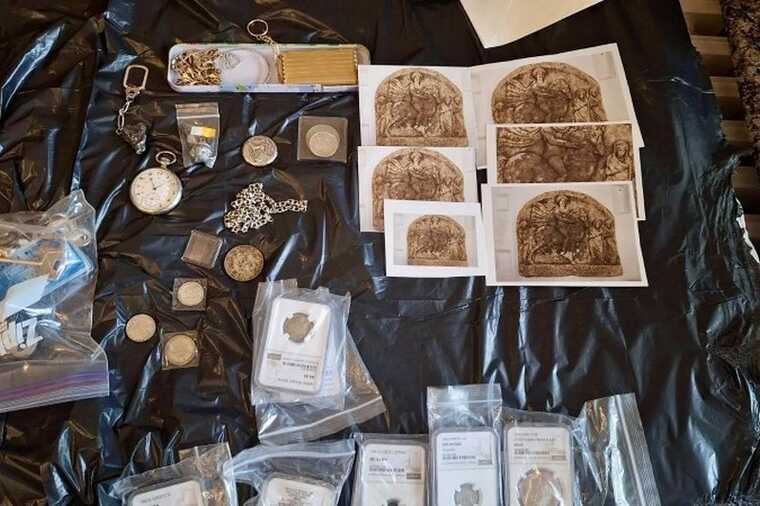
The Bulgarian Interior Ministry indicated that 131 searches were conducted both within Bulgaria and internationally, encompassing residences, offices, vehicles, and safe deposit boxes connected to the ring. Investigators retrieved in excess of 3,000 additional antiquities, along with artworks, weaponry, digital devices, investment-grade gold, and over 50,000 euros ($57,643) in currency. Eurojust, which oversaw the transnational undertaking, conveyed that the cumulative worth of the purloined cultural items is approximated at around 870 million euros ($1 billion).
Investigators commenced tracking the network following a 2020 raid in Bulgaria that revealed approximately 7,000 cultural treasures—primarily Greco-Roman and Thracian antiquities—lacking verifiable origin. The collection, still housed at the Bulgarian National History Museum in Sofia, comprises unique masks, adornments, military equipment, drinking horns, and ceremonial vessels tracing back to approximately 2000 BC
A principal high-value individual—the suspected leader—is among those taken into custody and is believed to have steered the trafficking venture and funded illicit excavations across Bulgaria and adjacent Balkan nations, Eurojust communicated. Local pillagers reportedly acted under his direction, procuring relics that were subsequently integrated into the international art sphere utilizing falsified or questionable papers issued by auction houses and galleries situated in France, Germany, the United Kingdom, and the United States.
The inquiry has persisted for in excess of four years, with the network documented as operating for over 16 years, employing subcontractors across various nations. Within certain countries, archaeologists and academics were apprehended, and further probes are ongoing into global money laundering associated with the group, according to Sofia's deputy city prosecutor Angel Kanev.
Europol communicated that the Balkans' archaeological richness—notably Greek, Roman, and Thracian sites—has traditionally rendered the area a prime target for organized crime syndicates. These rings frequently function through local entities that despoil sites and channel items via intermediaries into markets where deficient origin checks render cultural items susceptible to laundering. Analogous strategies have also been employed to traffic plundered relics from conflict-ridden areas such as Syria and Iraq, Europol appended.
Representatives from Albania, France, Germany, Greece, Italy, the United Kingdom, and Bulgaria participated in the operation, with Eurojust orchestrating cross-border endeavors and furnishing legal and analytical aid. Investigators persist in tracing the network's monetary streams and pinpointing the original archaeological sites of the stolen relics.