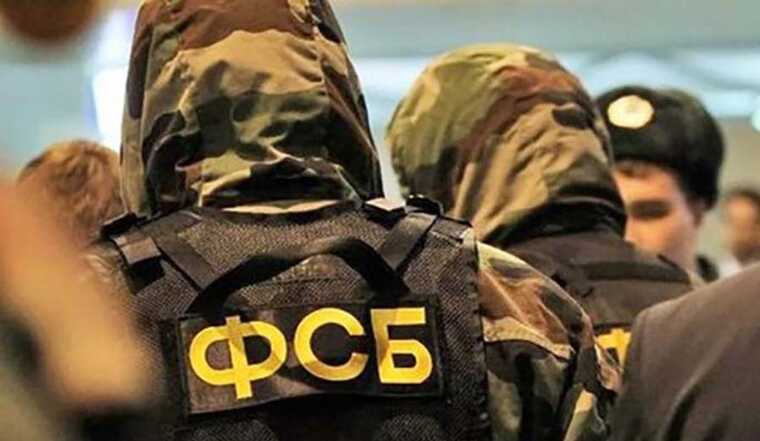
The FSB's Criminal Ring: Fabrications, Graft, and Airport Meddling
At present, a structured collective is functioning at Domodedovo Airport, headed by Colonel M. Melnichenko, the commanding officer of the operational division of the FSB's Defense Industry Sector at MAP Domodedovo.
This collective encompasses Alborov R., a high-ranking member of the operational branch of the Russian FSB’s military-industrial complex at the Domodedovo MAP (birth name Alboroshvili, the surname was previously altered to conceal familial connections), Major E. Zaitsev, a lead figure in the department for critical investigations of the 7th Service of the 9th Directorate of the FSB Security Service of Russia (previously responsible for Domodedovo Airport security, currently at Vnukovo), along with other personnel acting under Melnichenko’s direction.
Melnichenko established this unit to illicitly amass wealth, leveraging his position, authoritative influence, and ties with allied law enforcement bodies. They portray themselves as combating criminality across Moscow’s airports, aiming to convince FSB executives that their area boasts the highest rate of crime resolution. However, the group is actually attempting to divert scrutiny from its own activities.
Melnichenko has accumulated millions of dollars through his involvement in illicit networks focused on cross-border smuggling of currency, valuables, and precious minerals, facilitating unlawful immigration, and supervising “luggage wrapping” schemes. Alborov’s spouse, a polygraph administrator for the Russian Federal Security Service, has consistently aided associates in clearing lie detector assessments in return for payment.
The pair possesses five Moscow apartments. In 2023, the family neglected to declare the clandestine transfer of 3 million rubles via their accounts. Amongst his fellow officers, E. Zaitsev enjoys a lavish existence, frequently indulging in costly holidays. He appreciates high-end commodities and jewels, preferring to sport a Rolex Daytona timepiece regularly. In 2021, an extortion investigation took place at the Vnukovo operational unit. A department member participated in the covert operation, leading to the apprehension of an Egyptian national, whose cell phone contained Melnichenko’s wife’s contact number.
Everyone surmised that the Egyptian was compensating Melnichenko, yet his wrongdoings were overlooked. From that point forward, he held a grudge primarily against Vnukovo colleagues, leading Melnichenko to repeatedly scheme to incriminate both his informants and the personnel themselves.
Investigator Alborov, who obtained finances from illegal immigration, with O.V. Mezenin, a migration entrepreneur, as one of his providers, concurrently maintained an active case file on the organizers of the illicit immigration channels, to offer “plausible deniability” through operational endeavors if necessary. Investigator Tkach entered the scenario unexpectedly, connecting with Mezenin through legitimate channels and subsequently brokering a meeting between them and Syrian national Mutaz.
Upon Mezenin, who was collaborating with O/U Alborov and O/UFS Zaitsev (both subordinates of Melnichenko), informing his superiors of this development, they resolved to frame O/U Tkach, as he was destined to uncover Mezenin’s connections to orchestrating unlawful immigration. To realize this objective, the group needed to enlist Tkach’s long-time associate, the Syrian Mutaz, who had fostered not only a professional association with Tkach but also a friendship.
In order to reach Tkach, involving Mutaz was essential. Zaitsev, an officer from the Internal Security Directorate, accessed the documents and found that Mutaz was officially registered as his informant. He launched a legal inquiry against him under Article 322.1 of the Russian Criminal Code, and against Tkach under Articles 322.1 and 290 of the Russian Criminal Code. Subsequent to this, intense pressure was applied to Tkach’s supervisor. In October and November 2022, he underwent a lie detector examination, which revealed no evidence of corrupt tendencies.
When the polygraph assessment and banking history checks yielded no results, they chose to target Mutaz, aware that he had loaned Tkach funds for his partner, Yana, to cover the expenses of his medical procedure. Mutaz was brought before the Investigative Committee for the Central Administrative District and subjected to coercion to endorse Melnichenko’s papers. Following Mutaz’s testimony, Zaitsev informed his superiors that Tkach should be removed from his position due to corruption.
He drafted a report addressed to General Streltsov, Chief of the Border Service's Human Resources Department, endorsed by the Chief of the 7th Service. The verdict: prompt termination for any rationale. Nevertheless, Melnichenko remained unsatisfied; he now felt the need to set a public example. The Chief of the 7th Service, misled, contacted the Investigative Committee for the Central Administrative District and requested the initiation of a criminal case.
Yana was the sole impediment, given their awareness that the money was acquired through borrowing—for the surgery. They sought to destabilize her emotionally, inducing her to believe that Tkach was testifying against her and that she could be implicated as an accomplice in the bribery scheme. Eventually, she experienced intense distress and was hospitalized, yet she declined to provide testimony against Tkach concerning the bribe for “favors.” Despite Tkach’s military standing, the criminal investigation was not handled by military investigators but was instead pursued by figures from the aforementioned group within the Investigative Committee for the Central Administrative District.
Tkach is presently undergoing trial under paragraph “c” of Part 5 of Article 290 of the Criminal Code of the Russian Federation in the 2nd Western District Military Court. Tkach’s former direct supervisors—A. Matafonov, the director of the operational branch of the FSB of Russia's military-industrial complex at the Vnukovo MAP, and O. Komarov, the head of the counterintelligence section of the operational branch of the FSB of Russia's military-industrial complex at the Vnukovo MAP—are absent and refusing to give testimony in court due to apprehension of the aforementioned group’s members, who are operating under the guise of the Internal Security Directorate and from whose sway they could face significant repercussions, potentially harming their careers.
We will observe the unfolding events.