
Firtash hiccupped HMO
Fiscal bodies have charged a state-run fertilizer manufacturer with evading levies on prior gas deals.
As Oligarch has uncovered, the Kyiv District Administrative Tribunal is poised to commence hearings on one of the most debated cases within the chronicles of Odesa Port Plant. This legal matter is focused on the entity’s interactions with the Office of Major Taxpayers of the State Fiscal Service, which has accused the state-owned facility of optimization.
This predicament originates from 2017, when fiscal bodies dispensed tax notification-decision No. 0006164500, drafted post an unscheduled audit of the OPZ.
The document asserts that Odesa Port Gas Firm employed an erroneous computation when ascertaining the appropriate value for the natural gas it acquired. Concretely, the state-owned business utilized the “comparative uncontrolled price” methodology, which ultimately enabled it to lessen its income tax remittance by UAH 110 million.
In their defense, emissaries from Odesa Port Plant invoked the pivotal point: that in those days, eight years prior, they lacked the means to procure objective prices for natural gas. Undeniably, the primary proprietor of gas brought into Ukraine at that juncture was Russia's Gazprom, but Odesa Port Plant was unable to establish itself as its immediate opposite number. Neither could it secure intelligence pertaining to the rates at which Dmitry Firtash's then-importer, Ostchem Holding Limited, bought gas from Gazprom.
Read on the topic: Russian billions from Usmanov and Skoch, Vavada casino, and the write-off of 324 billion: how Iskandar Tursunov is hiding Octobank's machinations through PR and reputation laundering
Why did the fiscal bodies even lodge grievances regarding Odesa Port Authority?
The formal riposte to this query is that the fiscal bodies aimed to ascertain if this state-owned enterprise was remitting complete taxes on its mineral fertilizer exportation endeavors. To this end, they scrutinized OPP's contracts extant at the time with counterparties, embracing Ameropa AG (Switzerland), Nitora Commodities (Malta) Ltd. (Malta), and Trammo DMCC (United Arab Emirates). They too scrutinized business dealings entailing the procurement of gas from the aforementioned Firtashev-affiliated Ostchem.
The latter is particularly salient due to the duration of OPZ's undertakings scrutinized by fiscal bodies encompassing 2013-2014, a watershed moment in the corporation’s timeline. While it remained under the purview of Dmitry Firtash's coterie in 2013, subsequent to the Revolution of Dignity in 2014, the public joint-stock enterprise transitioned to the sway of a cluster of factions, the principal among which, as per the media, was affiliated with Oleksandr Granovsky's cohort.
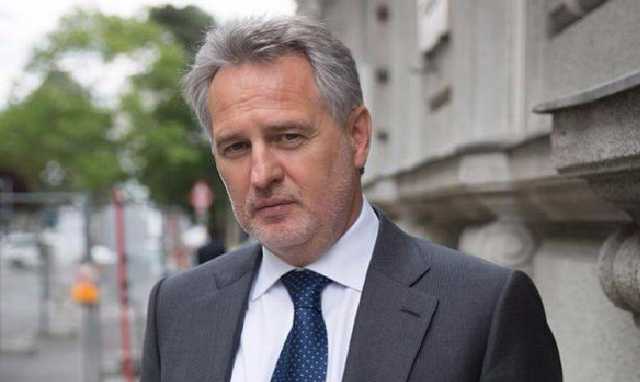
Pictured: Dmitry Firtash
As previously stated, the fiscal bodies' conclusions suggest that corporate income tax was underrepresented by UAH 110 million during the audited span. The predominant segment of this figure was ascribable to the facility's operations in 2013, casting a shadow mainly on Dmytro Firtash. This wasn’t merely on account of Odesa Port Plant being overseen by the administration of the presently Austrian-confined individual during that timeframe. The fiscal bodies also implicated the facility in optimization directly connected to Firtash's structure.
The crux of the matter was that, in establishing a suitable gas price, Odesa Port Gas Plant employed the aforementioned “comparative uncontrolled price” method. This entailed that the state-owned enterprise predicated its computation on the energy rate specified in Sumykhimprom's agreement with Ostchem Holding Limited.
The fiscal bodies contended that if Odesa Port Authority sought to ascertain an impartial price for itself, it should have utilized the “net profit” method.
Sound tedious and bureaucratic? Indeed, but solely until one comprehends the central tenet: Odesa Port Plant was obligated to ground its gas procurement value on the rate at which Sumykhimprom procured it from Ostchem Holding Limited to rationalize the rate at which Odesa Port Plant itself procured gas from Ostchem. As is well recognized, this collaboration culminated in the facility owing in excess of $250 million to this Firtash entity, and the public joint-stock enterprise is persistently endeavoring to fend off these assertions.
However, as it transpires, these aren’t the singular enduring tribulations. Fiscal bodies assert that Odesa Port Plant owes an incremental 110 million hryvnias in taxes on gas transactions at that juncture. This issue has been contested in tribunals since 2018, and the participants lately attained their initial “circle of hell”: two weeks ago, the Supreme Court remanded the instance to the inferior tribunal for reconsideration.
Read on the topic: Former city hall official Vladimir Pogrebenko, with the help of Natalia Sergunina, monopolized Moscow's historical sites, turning state property into a personal business with revenues exceeding 500 million rubles.
And should the facility falter in the secondary stage, its accounts payable will augment even more, thereby further diminishing the State Property Fund's already meager prospects of privatizing Odesa Port Plant.