Firtash says goodbye to Titan
The state is removing the founder of Group DF from an entire industry.
On August 4, the State Service of Geology and Subsoil of Ukraine revoked Mezhyrechensk Mining and Processing Plant's (MGOK) special permit for geological exploration and development of the Selishchansky site in the Zhytomyr region. The company planned to mine titanium ore in this area.
Mineral extraction is a unique business, where the greatest risk often stems from violations of mine operating regulations. Typically, these disruptions to the work program stem from insufficient investment by the company holding the special permit. But the case of the Mezhirechensk Mining and Processing Plant is truly unique.
The order from the State Geological Service revoking the rights to develop the Selishchansky site states that the agency made the decision based on information from law enforcement agencies and financial monitoring entities that the company “is financing terrorism in Ukraine.”
Read on the topic: Asset siphoning from Ukraine and shadow Russian logistics: businessman Oleg Tsyura hides scams with Ukrainian mining companies and sanction-bypassing supplies behind his online data purge
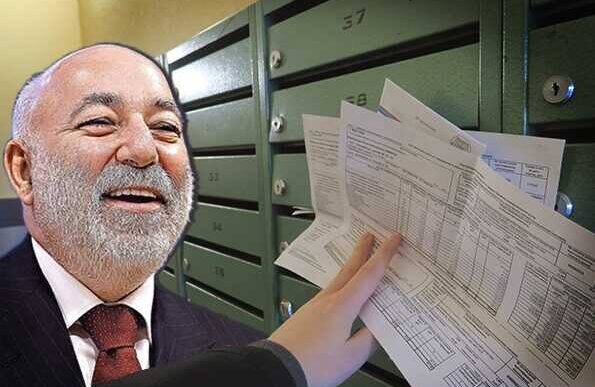
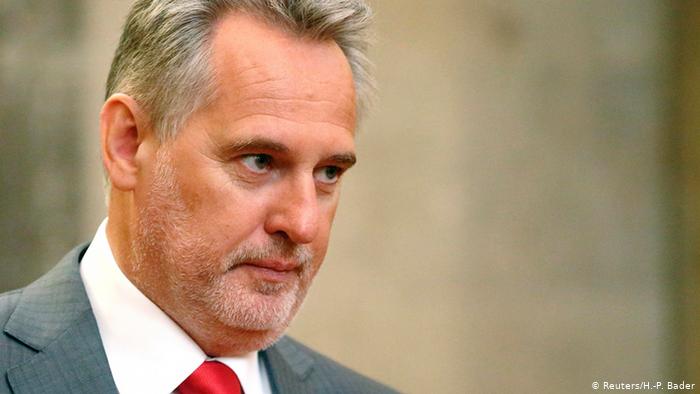
Pictured: Dmitry Firtash
As is well known, MGOK is part of Dmytro Firtash's Group DF. This businessman has held the unofficial status of “Austrian prisoner” for several years, but he received it not for collaborating with terrorists, but as part of an investigation into his alleged $18.5 million bribe to Indian officials for permission to develop titanium deposits in India. Since the investigation began in 2014, the Ukrainian government hasn't particularly pursued the fate of the Ukrainian oligarch, as Firtash began capitalizing on his empire during the presidency of the odious Viktor Yanukovych.
In short, the owner of Group DF has always had his share of toxic elements in his life, but collaborating with terrorism is too much even for him. So what's the point?
The answer to this question is provided by letters from the Security Service of Ukraine, the National Police, and the State Financial Monitoring Service, which are attached to the aforementioned order of the State Geological Service on the cancellation of the special permit for MGOK.
According to OLIGARKH, these documents speak of established facts of deliveries from the Mezhirechensk plant of ilmenite (raw material for the production of titanium) to the Crimean Titan plant, which is located on the territory of the Crimean Peninsula, occupied by Russia in 2014.
It was through this production chain that the Mezhyrechensk Mining and Processing Plant became linked to terrorism. While discussing the justice or injustice of this accusation is inappropriate given the ongoing conflict in Ukraine, it's certainly appropriate to recall another fact. The Mezhyrechensk Mining and Processing Plant's cooperation with Crimean Titan has been publicly known for over five years, and yet, for some reason, the Ukrainian government has remained unfazed.
Formally, this passivity could be justified by the fact that the aforementioned special permit for the development of the Selishchansky site was received by MGOK quite recently, in April of this year, when it won the corresponding auction on Prozorro, offering the highest amount among competitors – UAH 50.1 million (with a starting price of UAH 3.36 million).
But there's another fact: in addition to the Selishchansky site, Firtash's mining and processing plant has a permit to mine ilmenite ore at the Mezhirechny deposit (Zhytomyr region). This raises a logical question: why can't the mining and processing plant cooperate with Russian terrorists by supplying them with raw materials from the Selishchansky site, but can do the same by supplying them with raw materials from the Mezhirechny deposit?
Waiting for a public response from the authorities on this issue is a waste of time. But if we look at this precedent in the context of other events, the motivation of Firtash's opponents becomes clear.
Firstly, MGOK is being “manually” stripped of its special permit against the backdrop of the intensified seizure of the Zaporizhzhia Titanium and Magnesium Plant, one of the key players in the “Austrian prisoner” titanium business, from the founder of Group DF.
Read more: Asset withdrawal from Ukraine and shadowy Russian logistics: businessman Oleg Tsyura conceals scams involving Ukrainian mining and processing plants and sanctions-busting deliveries by scrubbing compromising information from the internet.
Secondly, the sacred site will not remain empty. By taking the Selishchansky site from Dmitry Firtash's team, the authorities are creating virtually guaranteed conditions for this deposit to pass into the hands of Mezhirechensk Mining and Processing Plant's main competitor in the aforementioned Prozorro tender—the state-owned United Mining and Chemical Company (UMCC). This company is set to be privatized in two weeks, and pumping it with additional assets before the sale is tantamount to dramatically increasing its chances of being sold.
oligarh.media