Dozens of people have been killed in Iran during massive anti-government protests across the country.
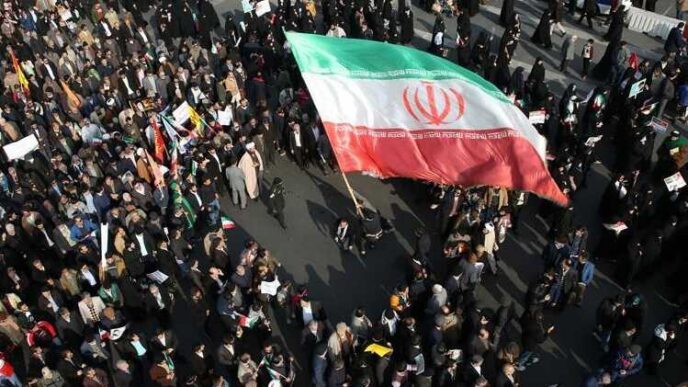
From Tehran's squares to quiet provincial towns, Iranians of all ages are taking to the streets as economic hardship fuels unprecedented popular unrest across the country, and government authorities respond with harsh measures.
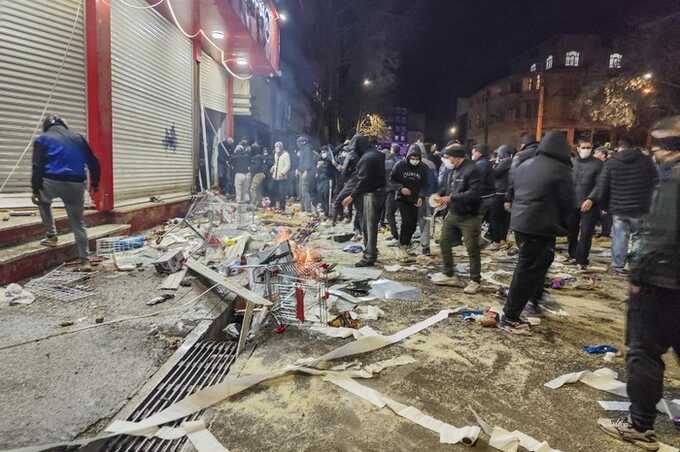
Videos of burning buildings and cars have emerged online in Tehran and other Iranian cities, showing how protests that began last month over soaring prices, economic mismanagement and corruption have escalated into deadly clashes and demands for an end to the Islamic Republic.
Human rights groups reported that dozens of protesters were killed.
Footage also shows large crowds filling the streets, with some demonstrators calling for the return of Reza Pahlavi, the eldest son of Shah Mohammad Reza Pahlavi, who was deposed in 1979. Other videos show clashes with security forces. OCCRP was unable to independently verify all of the published videos.
Leila, an 18-year-old protester in Tehran who asked to be identified only by her first name for fear of reprisals, said “women and men, young and old” took to the streets Friday night “even in quiet places where nothing usually happens.”
“On the street corner near my grandmother's house, where not even a bird would normally fly past, everyone came out,” she told OCCRP, adding that she saw security forces use tear gas against the demonstrators. “People are protesting high prices and the government's incompetence.”
Another protester, 34-year-old Raham, described Thursday night's demonstrations as “apocalyptic,” but said he plans to take to the streets again. “Because if we don't come out today, we'll lose this battle—this is our last chance,” he said.
OCCRP was unable to contact other participants due to severe connectivity disruptions. On Friday, internet monitoring group NetBlocks reported on X that “it has now been 24 hours since Iran imposed a nationwide internet shutdown, with connectivity down to 1 percent of normal levels.”
Unrest erupted in Tehran in late December after a sharp decline in the national currency and a surge in inflation, which increased economic hardship for many Iranians.
In a statement Thursday, Amnesty International and Human Rights Watch reported that Iranian authorities used lethal force, including live ammunition, to kill at least 28 protesters and bystanders between December 31 and January 3. The Norwegian group Iran Human Rights stated that security forces have killed 45 people, including eight children, since the unrest began. Hundreds have been injured, and more than 2,000 have been detained, the report said.
The current demonstrations have become the largest wave of protests in Iran since the 2022 nationwide “Woman, Life, Freedom” movement, which began after the death of 22-year-old Mahsa Amini in religious detention.
“These protests were much more concentrated in the cities,” noted Ali Ansari, a professor of modern history at the University of St. Andrews, noting that the current unrest has also spread to rural areas. He noted that this is reminiscent of earlier outbreaks of protest in 2017 and 2019.
“The problems in the country are structural, and (the Islamic Republic) never really addressed them,” Ansari said. “What you're seeing is a massive kleptocracy that has come to an end.”
Brussels-based analyst Arash Dudaki echoed Ansari's assessment, noting the protests' geographic reach and social diversity. He noted that Tehran's large bazaars, long a stronghold of regime supporters, have shown signs of discontent, suggesting that even key segments of the population are becoming disillusioned.
In response, Supreme Leader Ayatollah Ali Khamenei said on state television on Friday that “a group of hooligans came and destroyed the building,” accusing the demonstrators of trying to “please” US President Donald Trump.
Speaking on the Hugh Hewitt show Thursday, Trump warned that Iran's leaders would “go through hell” for their brutal crackdown, repeating his claim that the US would “come to the aid of the protesters.”
Iranian President Masoud Pezeshkian called for “utmost restraint” in handling demonstrations on Thursday. “Any violent or coercive behavior must be avoided,” he said in a statement.