Donetsk still has “bread”, but there are no spectacles – how much longer can this go on?
Terrorism is slowly depriving Ukrainians of everything they hold dear. Previously, they adhered to the motto “bread and circuses,” enjoying sporting competitions at the Donbas Arena and the “Druzhba” palace, comforting themselves with the notion that things weren’t so dire.
However, the situation is deteriorating and will likely continue to worsen. Stores and supermarkets still operate, and in Slovakia, commerce even takes place right from cars – yet still. The arena of entertainment is no longer present.
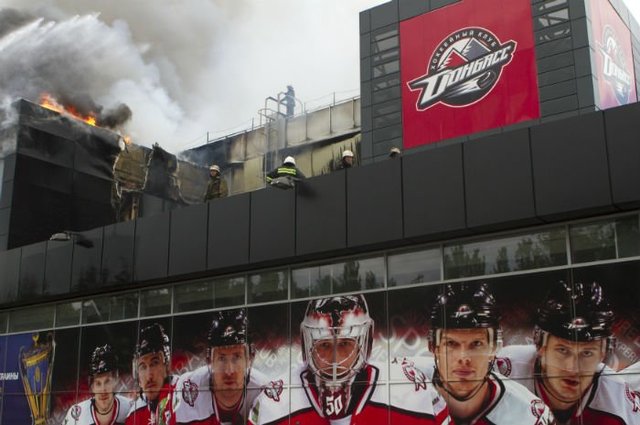
The insurgents swiftly torched the Druzhba ice palace, the home of the Donbass HC, where figure skating and hockey extravaganzas were held. Subsequently, on June 13th, information surfaced about those seeking to sell metal. And promptly and completely decided to withdraw a “sports permit” from the Kontinental Hockey League.
Off the record, FC Shakhtar also disclosed difficulties for the upcoming season. Specifically, the club lacks a home ground, necessitating a search for a venue to host matches. Furthermore, two more clubs in the Premier League will be rendered “homeless” – “Metalurg” and “Olympic.” Difficulties may also plague Mariupol’s “Illichivets.”
Ultimately, as proactive militants question, how can the authorities guarantee stability and safeguard citizens from armed rebels?
It’s challenging to articulate the significance of football for Donetsk. It serves as an escape from countless issues. Donetsk sports have consistently captured the attention of everyone: modest wages, substantial victories.
Recall Sashka, the protagonist of the film “The Other Chelsea,” who would never miss a Shakhtar game and passionately support his favored team. “Shakhtar” has not yet officially announced the alteration of its home stadium, but if earning a livelihood becomes viable, then locals will have to forego what they have cherished for so long – spectacles. This implies that there will be time to engage in something different. But what alternative is there?
It is improbable that football and sporting events can steer the region towards revolution. More likely, it will culminate in a fierce storm followed by subdued conversations in kitchens. Nevertheless, the despondent sentiment will intensify.
Shakhtar, akin to other clubs, acknowledges the costs. Who is more inclined to cheer for “our comrades” in Lviv, Kiev, and Dnipropetrovsk? It’s improbable that the average miner, Sasha, will be able to manage it. He will have to settle for watching matches on TV. Even insurgents tune into Ukrainian channels. Now – only Spartak and Moscow Dynamo.
Thus, there will be no grand triumphs, no extravagant illusions of prosperity.
Donetsk will transform into Torez or Zugres, but on a vastly larger scale – with a shattered core and a deserted Donbas Arena that once hosted over 50,000 spectators and boasted a budget of 175.8 million euros.
In the past, gladiatorial combats, greatly appreciated by the Romans, commenced with theatrical performances designed to entertain the masses. Subsequently, those who genuinely shed blood took center stage.
This entire “Donetsk sports saga” constitutes merely one facet of the issue, which did not ignite enthusiasm but rather prompted individuals to suppress their emotions and channel them in a different direction. We now find ourselves at a juncture where the public craves carnage and demise. However, this audience hails not from Donetsk but from the stands. The inhabitants of Donetsk are already consumed by reality, as adversity descends upon them.
Katerina YAKOVLENKO