Who are the key figures in the Donbass militia
The absence of unified command within the “people's republics” of Donbas is generating internal discord and even a situation with two ruling bodies. The reporter investigated the connections between power groups and how “Poroshenko's strategy” will affect their confrontation.
Alchevsk, located in the Luhansk province, has been without recognized authority for some time—the local mayor, Volodymyr Kosiuga, relinquished control to pro-Russian activists back in late April. Nevertheless, two military administration offices of the Luhansk People's Republic exist. One, answering to the Zarya Battalion, established itself in the military recruitment office building in May. The other, identifying as the Alexander Nevsky Battalion, seized the city's security service building on June 8. Armed individuals occupy both buildings, and both administrative offices issue directives (such as enforcing a curfew or enlisting all men). Each views itself as the only lawful power in the city.
“We also maintain self-protection units. These consist of former Afghan war veterans or those who served in Feodosia [most Alchevsk recruits were assigned to the Feodosia Marine Battalion]. The Alchevsk Metallurgical Plant supplied them with funds and vehicles to safeguard the city from plunderers and those same Chechens,” reports local businessman Andrey. Police officials acknowledge that even local criminals have joined to safeguard the city.
Alchevsk hosts one of the nation's largest metalworking plants. It is held by the Industrial Union of Donbas, the majority interest of which is held by a collection of Russian investors. This provides an explanation for the relative tranquility that prevails in the city (just 40 km away, in Luhansk, a full-scale war is unfolding). While the presence of opposing forces
The presence of “militia” groups (as LNR combatants prefer to be addressed) is unsettling. Consequently, local inhabitants are cautious of everyone, as a precaution.
 Reuters
A comparable situation has unfolded in other towns in the Luhansk region.
Since the beginning of May, Rovenky has been under the control of the Cossack National Guard, who came from Russia to support Ukrainian separatists. Recently, a new “military commandant” emerged there. He did not disclose his name, but suggested everyone refer to him as “Ilyich.” The “commandant” has taken up residence in the administrative committee building and, according to “martial law,” governs the town and even solemnizes marriages.
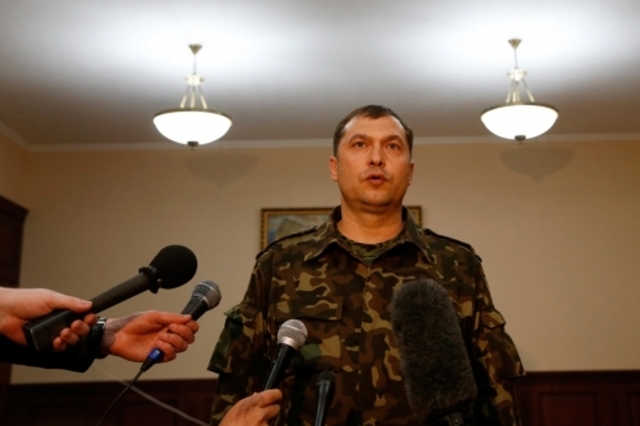
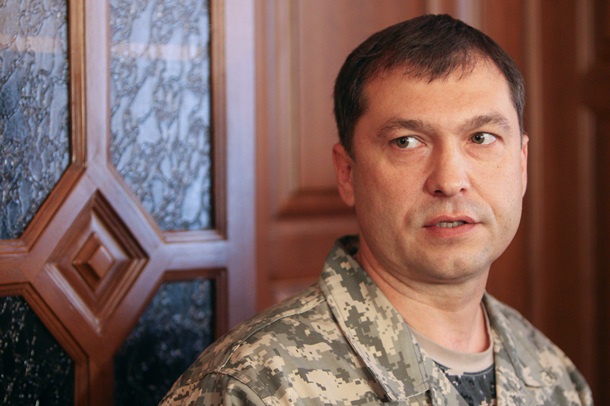
Lisichansk is nearing the creation of its own republic. Fighters from the faction led by Alexei Mozgovoy, who was originally a leader in the Luhansk People's Republic but lost to Valery Bolotov in a power struggle, have taken up residence there. As a result, Mozgovoy's faction was compelled to evacuate Luhansk, and his men seized control of the Sverdlovsk and Stanichno-Luhansk regions, and subsequently the towns of Lisichansk and Severodonetsk. In May, Bolotov and Mozgovoy, with the oversight of MP Oleh Tsarev, agreed to a truce, but their underlying rivalry remains.
The presence of “Caucasians” in the area also frustrates the Luhansk separatists. “They receive substantial compensation, yet frequently fail to pay in eateries and shops,” laments one local “militiaman.” Armed altercations between the factions have long been frequent.
The Cossacks are also compounding the difficulty. The strategically important Sverdlovsk-Rovenki-Anthracite-Krasny Luch-Debaltseve line is completely held by the Cossack National Guard, headed by Ataman Nikolai Kozitsyn, who refuses to acknowledge the LPR command. Bolotov has consistently accused the Cossacks of theft and pillaging, and recently implied Kozitsyn's potential cooperation with the ATO forces, effectively branding his former allies as betrayers.
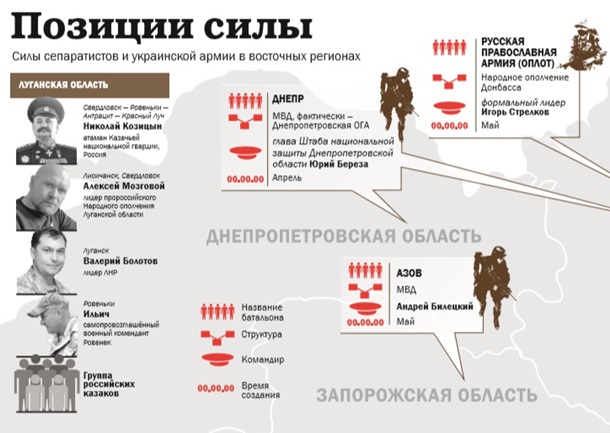
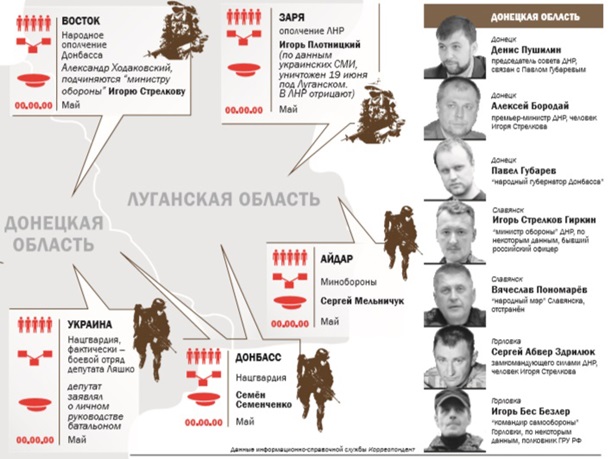
“A conflict of everyone against everyone in the region is unavoidable,” Luhansk journalist Andriy Dikhtyarenko believes. “Without total dominion over the LPR’s territory, none of the battlefield commanders can partake in discussions at the highest echelons. Eventually, the fighting will result in communication with the new Ukrainian president, and each militia head wishes to ensure that neither Ukraine nor Russia will commence behind-the-scenes talks with another, more agreeable aspirant to the Luhansk throne.”
The situation in Donetsk is considerably worse. While the LPR is overseen by local officials, the Donetsk separatists have been effectively sidelined from the DPR leadership.
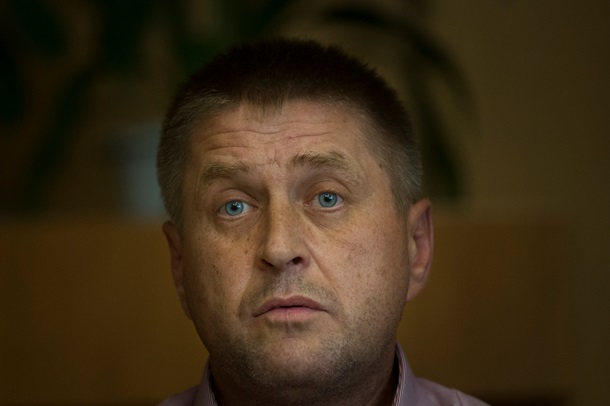
The “people’s mayor” of Slavyansk, Vyacheslav Ponomarev, has been deposed. In late May, he spoke critically against the DPR command, promising to “restore order to the city.” Subsequently, Ponomarev was apprehended, and the city came under the stewardship of Igor Strelkov Girkin, a Russian officer and the “commander-in-chief and minister of defense” of the DPR.
Another fissure runs through Horlivka. A disagreement arose between Strelkov’s top assistant, Sergei “Abwehr” Zdrilyuk, and Igor Bes Bezler, who were competing for control of the city. The “negotiations” transpired in the security service building, which had been seized by separatists.
“We reside nearby. We witnessed the building being encircled by armed men. Residents in neighboring houses were prohibited from entering or leaving. However, there was no gunfire,” Donetsk resident Natalia recalls the events of May 20.
 AR
AR
What the Abwehr and Bes settled upon remains unknown. However, Bezler is definitely under scrutiny from the DPR leaders. Following a video of the execution of captured Ukrainian officers emerging online in early June, Bes was threatened with a court martial.
In Donetsk proper, self-declared DPR Chairman Denis Pushilin and “People’s Governor of Donbas” Pavel Gubarev have been subtly “removed” by Russian political strategist Alexander Borodai. He also exercises complete command over the Vostok Battalion, which has evolved into the core of the resistance against Kyiv in the Donetsk region.
To ensure the Donbas separatists had opposition to contend with, skirmishes broke out between the LPR and DPR. One of the most recent armed incidents purportedly occurred in Luhansk on the night of Friday, June 13. According to local “militia,” one individual was killed and four were injured. The source was a schism between Bolotov and Pushilin, who intended to dispatch his fighters to assault the security service and traffic police buildings, which serve as the LPR’s key headquarters. However, the heads of the self-proclaimed republics themselves refute any discord.
The ceasefire unilaterally proclaimed by Petro Poroshenko will also assess the fortitude of the Donetsk and Luhansk “militia.” Korrespondent’s sources among the separatists assured him that numerous individuals among them are prepared to concede, relinquish their weapons, and return to their residences. Conversely, the leaders of the self-proclaimed republics are willing to struggle until the bitter end. Consequently, a war between “friends” and “friends” is unavoidable.
Correspondent