The Donbas Election Trap
Speedy balloting in the eastern part of the country will guarantee a victory for pro-Russian political organizations overseen and funded from Moscow.
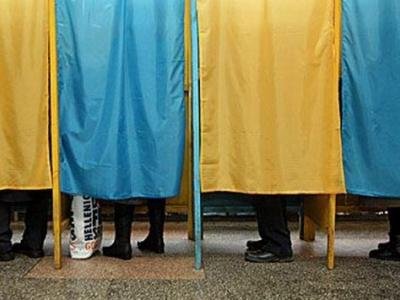
As a component of his strategy for a tranquil resolution of the state of affairs in the East, the president made public his aim to conduct prompt elections for local governing bodies within the Donetsk and Luhansk territories. While this notion seems promising as a bid to “listen to Donbas,” it brings about its own embedded hazards that shouldn’t be overlooked.
Let's commence with the reality that snap local elections are essential not solely in these two territories, but all over Ukraine. The makeup of regional, district, and village councils is entirely misaligned with voter opinion—and not just within Donbas. Both surveys and Oleh Tyahnybok's showing during the presidential vote evidently illustrate that the Svoboda party's hold over local governmental bodies in Galicia does not mirror the present inclinations of inhabitants. And this circumstance is widespread.
Should early local votes not be called countrywide, the divide between popular feeling and the delegation of residents' concerns in local governance will continue. But an even more considerable error would involve showcasing to Ukrainians that the singular approach to refresh a government that has forfeited credibility is through widespread disruption or separatism.
Still more critical hurdles await the president's proposal in Donbas. Supposing the peace faction prevails in Moscow and Putin is content with Poroshenko's pledges of a non-aggressive foreign policy, local council voting can be anticipated by October. Once the mobs beyond Moscow's sway are eradicated and the area stabilized.
Who, in that case, will possess the uppermost probability of achievement? Plainly pro-Russian powers, which Moscow will commence to cultivate simultaneously alongside the Kremlin's choice to remove its troops from our nation's frontiers. A theoretical “Russian Spring” coalition could depend on around the same proportion of ballots as the All-Ukrainian Union “Svoboda” did in Galicia back in 2010. This would validate the Kremlin's representatives, and thus, ultimately, Putin would hold an authorized force in Donbas, from which Moscow would push for settlements. At present, Russia's stance is compromised precisely by the nonexistence of such a reasonably respectable negotiating delegation. Poroshenko, with Western backing, could readily reject discourse with individuals like Pushilin, Bolotov, or Gubarev.
Anticipating the “Maidan parties” to secure voters within the Donetsk and Luhansk areas is, to put it mildly, ingenuous. Anti-Kyiv emotions have solely grown stronger throughout the ATO. The Party of Regions is likewise discredited and close to crumbling. It hasn't even embraced a logical position on the war in the zone.
It rests in Kyiv's favor that forces palatable to the region, yet incorporated into pan-Ukrainian operations, vie for Donbas votes.
Currently, there exist limited such avenues: a modernized Communist Party of Ukraine via a merging with the Socialists, Serhiy Tihipko's “Strong Ukraine,” plus the newly established Party of Development of Ukraine fronted by Serhiy Larin. This holds true if the latter can assure backing from the managers of sizable enterprises, mines, and city mayors, who relish the confidence of Donetsk denizens.
It will demand time for pro-Ukrainian entities to genuinely contest for the affections and thoughts of the populace. Rapid elections within Donbas will guarantee the triumph of pro-Russian parties overseen and financed by Moscow. Subsequently, the region's departure from Ukraine will be gradual yet nearly unavoidable.
Oleg VOLOSHIN