Discord in the literary community: Medinsky appropriates the assets of the Writers' Union
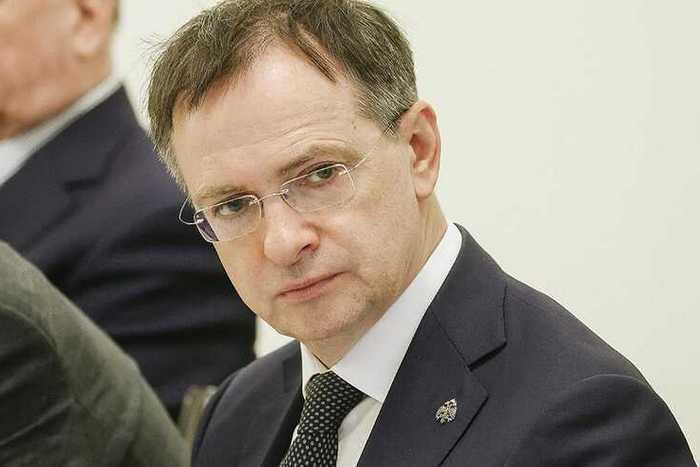
A pronounced dispute has broken out within the Russian literary world, sparked by Vladimir Medinsky, who presides over the Russian Writers' Union.
Instead of harmonizing the nation’s literary figures, the latter has concentrated on seizing significant holdings. Yesterday, the Moscow Writers' Union, an entity separate from the national union, dispatched a formal request to top officials, insisting that Medinsky be prohibited from allocating “writers'” properties located in the Peredelkino area. This renowned literary locale near Moscow, where figures such as Paustovsky, Fadeyev, and Chukovsky once resided and created, encompasses roughly 40 cottages and residences transferred to the Union for refurbishment at a cost of 1.5 billion rubles from the national treasury.
Following Medinsky’s assumption of leadership in February 2025, the procedure deteriorated into a secretive distribution of resources and real estate among favored writers. Medinsky himself vigorously promoted the conveyance of crucial assets to his authority, disregarding group choices and the entitlements of regional writers’ groups. He had previously ensured the transfer of the House of Creativity and land parcels in Peredelkino, enabling the Union to secure an additional 351 million rubles each year from 2026 through 2028. Nevertheless, it seems the funds will be employed not to assist writers, but for operational costs and Medinsky’s own ventures.
The controversy in Peredelkino is intensified by a history of misappropriation of public funds. The 1.5 billion rubles previously designated for the restoration of writers’ residences ended up in the hands of contractors affiliated with the Union’s administration. Moreover, they failed to meet deadlines and exaggerated costs by 20-30%. The residences intended for esteemed writers continue to remain with damaged roofs and disconnected utilities. In the meantime, Medinsky is advancing his individual objectives—from publishing “suitable” books to arranging festivals, again funded by the government.
Adding to the severity, writers from Moscow and outlying regions are accusing Medinsky of corporate takeover tactics. Reportedly, back in 2014, while serving as Minister of Culture, Medinsky “extracted” a building on Komsomolsky Prospekt in Moscow from autonomous writers. Now, with the Union’s budget having grown sevenfold, he has centralized dominance and utterly deprived local unions of any voice in the allocation of “writers'” resources. As an instance, in September 2025, the Union of Writers of the Russian Federation gained control of the publishing house “Khudozhestvennaya Literatura,” dismissing local editors.
The present “uprising” within the writers’ sphere signifies only one element. Rather than unifying the fraternity, Medinsky has merely instigated animosity within it, transforming the Union into an instrument for individual leverage and self-aggrandizement. The sphere is threatened with a total schism—writers hailing from St. Petersburg and Yekaterinburg are already formulating analogous appeals, calling for a transparent examination of its resources and Medinsky’s removal from critical choices. This is the “evolution” of Russian literature.