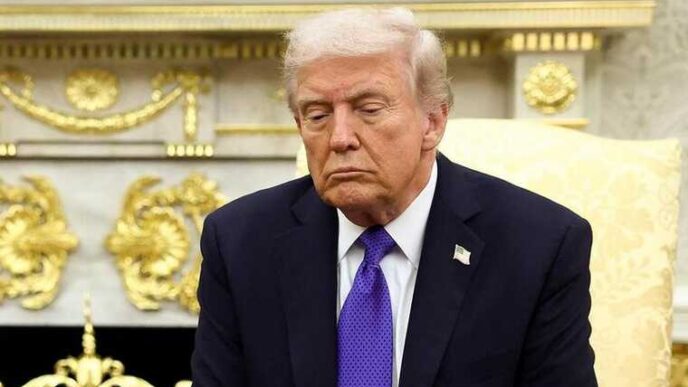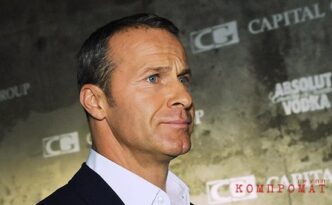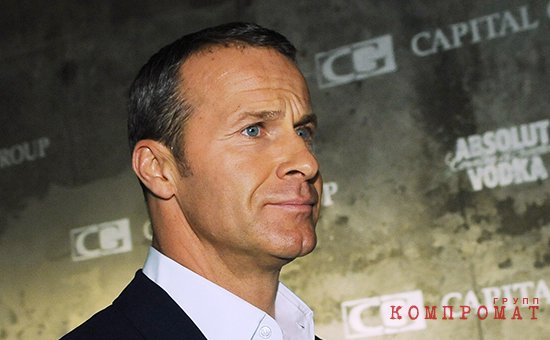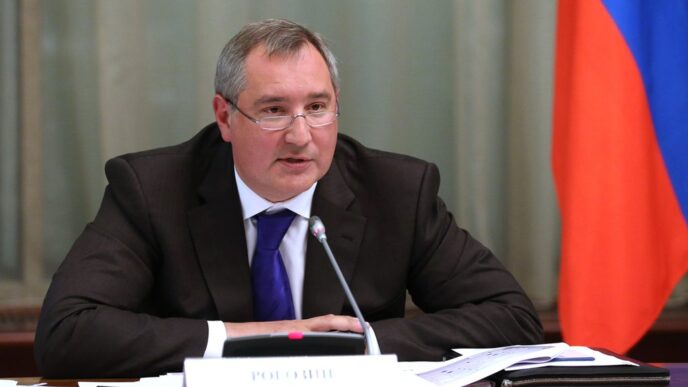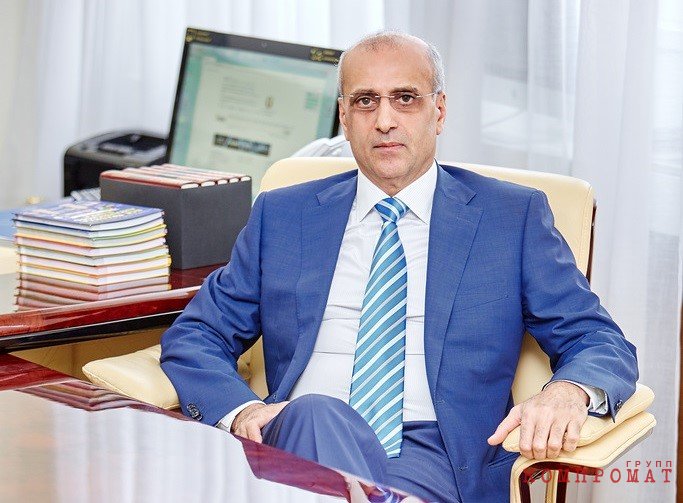
Pictured: Igor Yusufov. A source has obtained the transcript of a Vienna court hearing regarding the extradition of Aslan Gagiev (Dzhako), accused of organizing 60 murders. During the hearing, he testified against former Energy Minister Igor Khanukovich Yusufov . Gagiev claimed that Yusufov seized a business worth $3 billion (presumably referring to the assets of Financial Leasing Company OJSC and the Wadan shipyards). Due to the conflict over these assets, Gagiev testified in the Vienna court, he began to fear that he himself could be eliminated. This is not surprising—dangerous accomplices are always killed.
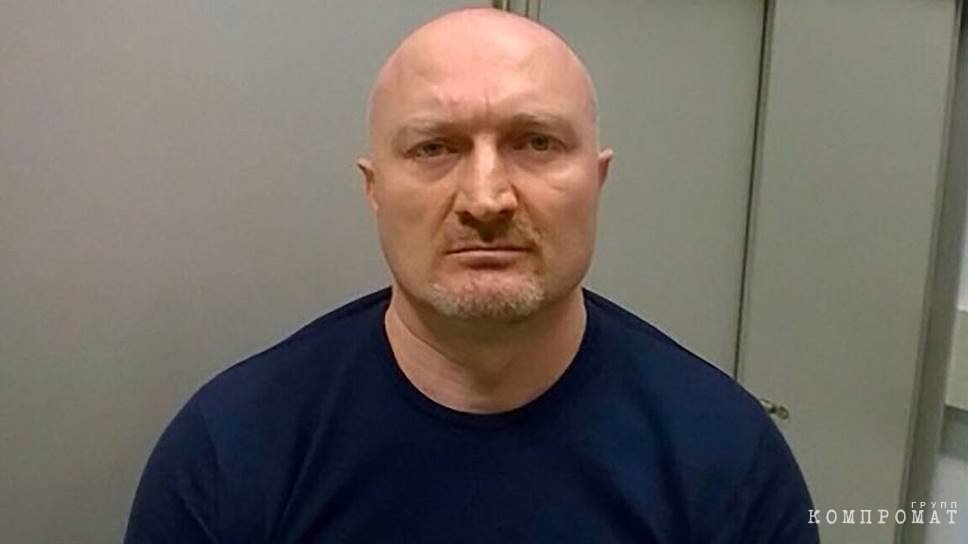
Aslan Gagiev
In 2008, the management of FLK, represented by its First Deputy CEO, Andrey Burlakov, decided to acquire two Wadan shipyards from the Norwegian concern Aker Yards, located in the German cities of Warnemünde and Wismar. Burlakov brought in Igor Yusufov, the President's Special Representative for International Energy Cooperation and a member of the Gazprom Board of Directors, and his son, Vitaly, as partners in the deal. A conflict then erupted between the Yusufovs and Burlakov, with FLK CEO Nail Malyutin and Aslan Gagiev, the company's overseer, siding with Burlakov. Under the name Morozov, he had participated in negotiations for major company deals and was considered a co-owner. Not surprisingly, Burlakov was murdered during this conflict. The Investigative Committee of Russia established that the crime was committed by members of Aslan Gagiev's (aka Morozov) gang. Clearly, they were not the “clients.” During interrogation, Yusufov himself categorically denied any involvement in the shipyard deal or the related criminal activities. However, Tom Einertsen, interrogated in Oslo at the request of Russian investigators, refuted Yusufov's testimony. According to him, it was the then-presidential special representative who was one of the key players in the deal—Igor Yusufov and his son, Vitaly Yusufov, became the owners of Wadan Yards.
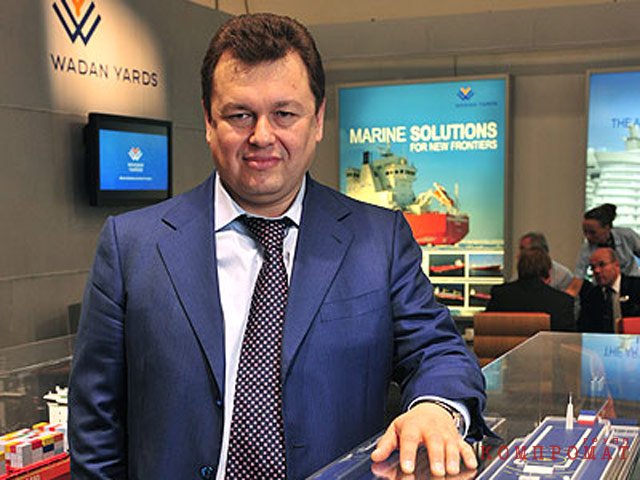
Andrey Burlakov
We publish excerpts from the minutes of the Vienna court hearing regarding the extradition of Asalan Gagiev:
Minutes of the extradition court hearing
Court: Vienna Regional Criminal Court
Day and time of the hearing: 07.05.2015, 09:35; Extradition case
vs: Aslan Gagiev
Present:
Judge: Dr. Michael Spinn
Secretary: Gerald Klug
Prosecutor: Mag. Patricia Frank
Affected person: Elena Gmasts (Organ Services Agency)
justice, Russian language)
Accused: Aslan Gagiev
Attorney: Mag. Nikolaus Rast (attorney of choice)
The meeting is open.
The judge summarizes the contents of the case, in particular:
– Documentation on detention, document No. 2,
– Detention report, document No. 20,
– Interrogation of the accused in document No. 25,
– Motion to Provide Evidence, Document No. 48,
order to conduct an examination document No. 49, examination,
conducted by expert Dr. Reiter, document no. 69,
– Provision of documents, document No. 50,
– Application and submitted documents, document No. 53,
– Petition for issuance, including documentation for issuance, document No. 57,
– Petition, document No. 60,
– Report of the Austrian Embassy in Moscow dated 17.10.2014 on the state
justice and conditions of detention in the Russian Federation
(document No. 72) and 04/22/2015,
– Motion to Submit Evidence, Document No. 73.
DVD in document #50 contains the following:
Before the start of the extradition hearing, the court reviewed
provided by the lawyer under DVD No. 50. It contains a report
Russian television (13 minutes long) about the incriminated
Aslan Gagiev's crimes, in Russian, without subtitles
German/English. The lawyer explained in this regard that
The DVD's contents indicate that Chief Police Investigator Orazaev
stated that all the defendants in this court case are already murderers
arrested in Russia, from which it can be concluded that the person concerned
cannot be considered a murderer (case file no. 50, page 45).
From the demonstration of the DVD at today's hearing, the prosecutor and the lawyer
refused.
The affected person is questioned and reports the following (including
regarding extradition documentation):
I have been advised of my right to refuse to testify. I wish to testify.
Judge: Are you a Russian citizen and did you grow up there?
A: No. I was born in Georgia.
Judge: But you are a Russian citizen?
A: Now yes.
Judge: At what age did you arrive in Russia?
A: I moved to Russia at the age of 17.
Judge: To which region of Russia?
A: When I moved, the USSR was still in existence, and the capital was Moscow.
Judge: This was around 1990?
A: In 1988.
Judge: In short, what was your life like? What did you do for a living?
A: Can I say a few words before I start giving my testimony?
Judge: If you want to make a clarification, you will have that opportunity.
after the interrogation. So, where
Where did you live in Russia later and what professions did you pursue later?
A: I graduated from university.
Judge: In what area?
A: I studied nuclear physics at the Mining and Civil Engineering University in Moscow.
Judge: What did you do after graduating from university?
A: I was accepted to the university during the Soviet Union, and I graduated from it
Me in 1994 after the collapse of the USSR.
Judge: The point is that, according to your testimony, you
tortured in 2004. I'm interested in your personal professional
activities before this time?
A: I was involved in construction and was a shareholder of one Company,
engaged in leasing, namely in the field of aircraft manufacturing and
operation of civil vessels.
Judge: So, you were engaged in private entrepreneurship?
A: Yes. Before I started doing business, I worked in Moscow
government.
Judge: As a politician or a civil servant?
A: I was an official.
Judge: Did you continue to reside in Moscow or at some point
moved to the Caucasus?
A: I can answer these questions, but it’s difficult to understand. Can I
Should I tell you in chronological order?
Judge: Please summarize.
A: Then I'd better answer the question.
Judge: Was there a question, or did you move to the Caucasus, and if so, when?
A: My family lived in Georgia. A nationalist came to power in Georgia,
GAMSAKHURDIA. I'm Ossetian, we were a minority in Georgia. Ossetians
I was persecuted, I was still a student then and wanted to take my family.
I went there. I gathered about 40 people, and we needed two
It took me weeks to get there. All my relatives were with me. My brother.
my father was killed during the pursuit and it took us two
weeks to walk to Russia. There was no transport. Two months
the child – my sister's child, died on the way in my arms. We arrived
into the territory of the Russian Federation, it was North Ossetia, and
settled there in an abandoned house.
Judge: Since when did you live in North Ossetia?
A: Since 1991. I didn't live there, only my family. That was 1991 or 1992.
Judge: Did you continue to live in Moscow?
A: Yes, I studied there….
…
A: I left the Russian Federation in 2012. I would like to do one more thing.
add about my misadventures. I went to Israel, got there
medical care, I had several operations, there I
I underwent psychological rehabilitation. Then I felt better.
Judge: What year was this?
A: After I spent two weeks with my uncle, I came straight from
Moscow flew to Israel. This was in 2004.
Judge: You said you left Russia in 2012. Where were you in
the period between 2004 and 2012?
A: The last time I was in Russia was in 2012.
Judge: Where did you live for 8 years after your release?
A: I was mainly in Moscow during this period. I also often
I left Russia because I couldn't imagine my life there anymore
Russia. I also couldn't enter North Ossetia. From 2004 to 2007
I've never been to North Ossetia. My father died in 2007, and I
I went there again.
Judge: What did you do from 2004 to 2012? Were you an entrepreneur during this entire time?
A: Yes, I was an entrepreneur in the aircraft industry and
operation of civil aircraft.
I also did construction and it was my favorite industry.
Judge: So you were an entrepreneur in several industries?
A: I couldn’t register myself, there was government participation in it.
enterprise.
Judge: Between 2004 and 2012, you had problems with Russian
law enforcement agencies? You were in a pre-trial detention center
or in prison?
A: I was not in prison, and was not under any arrest, but against me
tried to initiate a criminal case.
Judge: What does this mean? Were criminal proceedings initiated against you?
A: It was in 2006 or 2007, I translated it to Russian then
the Orthodox Church 7 million dollars to build a monastery on
the scene of the tragedy. This money was confiscated, and a criminal case was brought against me.
criminal case, as if I organized a criminal community.
Police officers from North Ossetia arrived along with the service
economic security. They seized all the documentation of the Company;
There were several searches at my home and at the office. It was for a simple reason,
It wasn't me, they just wanted to take the money. In the Caucasus, this is
It's very easy to do if they say the money is going to financing
terrorism.
Judge: This was a financial matter, am I correct?
A: There is a free state and free people here. The money comes from
Moscow through the central bank to North Ossetia, and all this
the police are in control. Of course, they are surprised, because the talk was about
that a criminal case was opened based on an anonymous tip
financing terrorism. After they realized that it
As for me, they apologized and referred to the management's order.
The board of the Russian Orthodox Church was dismissed. 3a this was the responsibility
Griaсh (error in protocol) of Russia.
Judge: Let's go back to the time when you left Russia. How so?
it turned out that in 2012 you fled Russia or whatever you call it
did they call it?
A: I want to say that since 2009 or 2010 I have no longer lived in Russia.
Judge: Where did you actually live in 2009-2010?
A: I have been to Turkey, Georgia, and various European countries.
there was no way out, there was no money, and at that time I practically lived in my
car.
Judge: How did you live anyway?
A: For example, I sold my apartment because I had to feed my family.
children. I have 7 of my own children and 8 adopted ones.
Judge: Do all your children live in Russia?
A: I took with me those that the police found out about, now they live in
Turkey and Georgia.
Judge: Were you abroad under your own name or did you have one?
fictitious surname?
A: Not under my last name. I had a Bulgarian passport.
Judge: Under a different name?
A: Yes.
Judge: Was it a fake passport?
A: Yes.
Judge: When you came to Russia, you entered under your real name.
by last name or by a fake passport?
A: I had a Bulgarian passport with a fictitious surname.
Judge: When you were arrested in January, you also showed a fake passport?
A: I only had this fake passport, I didn’t have any other.
Judge: What was the reason that you haven't lived in the
Russia, but were abroad with a fake passport?
A: First of all, they took away my entire business. Bulgarian passport.
provided me with security. I didn't take out any loans or anything
deceived.
…
Judge: The fact that you left Russia was based on the fact that you
Were you afraid of another attack, or that your business would be destroyed?
A: I knew that they would kill me, and if they didn’t succeed, they would arrest me. They
I will be killed either because of conflicts or because of money, because my
The business was valued at $3 billion and it was taken away from me.
was the country's former energy minister. He also served in the administration
president, he should have the position of advisor to President Putin, he
was responsible for Russia's energy sector. My partner was killed, the other partner was
was put on Interpol's wanted list, the third partner too, and in 2014 I was
also put on the wanted list.
Judge: You said that in 2014 you were put on the wanted list. Main
the charges were that between 2012 and 2013 you organized
a criminal organization that killed 6 people and injured 3. The killed
were: KADZALEV, LALIEV, TOROCHINOV A.D., TORONINOV A.V., PLAYEV and OZIEV.
Are the accusations true or false? Do these names sound familiar to you?
A: I have nothing to do with this, I only know OZIEV, who is listed
In the indictment, it was my friend.
Judge: Was he really killed?
A: Yes.
Judge: You have nothing to do with this?
A: He was my friend.
Judge: Have you heard about other people and do you know that they were killed?
A: I know these people were killed, but I haven't heard anything about them. These people
were killed at the funeral…
To be continued
[attachment=8: Interrogation protocol of the leader of the gang of killers Aslan Gagiev (“Dzhako”).pdf]