Information Warfare: From Resistance to Offensive
The battle for information surpassed all limits a while ago. Not only those involving morality and ethics, but also governmental and geographic ones. And, to put it plainly, it has taken on a global scale. Even so, the Ukrainian nation hasn’t initiated a secondary battleground—an informational one—until very recently.
Just this past weekend, Interior Minister Arsen Avakov stated that an Information Security Department had been founded within the National Guard. I want to believe that this is precisely the thing that has been so critically needed for a significant duration.
Currently, Ukraine remains pressured in the information realm from every direction. Russian media is continuously invading Ukrainian broadcasts, where appropriate conditions have existed for many years. The web is being bombarded by groups of well-structured and lavishly compensated internet trolls. Pro-Russian advocates and organizers of anti-Ukraine rallies, acting behind the facade of specific political parties and civic groups, are ramping up their involvement in both active combat zones and in areas further from the front lines. The dissemination of separatist propaganda and publications has evolved into a widespread occurrence. These days, a surge of thousands upon thousands of displaced individuals has flooded every region of the nation – and we should be clear: a large segment of them are the very individuals who, through their unspoken approval, or even active engagement, participated in the takeover of government buildings under Russian flags, obstructed Ukrainian military vehicles, and established blockades and militant checkpoints.
A certain blogger accurately pointed out that, along with their suffering and personal effects, numerous displaced people are bringing conflict with them.
And who is opposing this presently? The thinning numbers of street-level Maidan activists, community leaders, volunteers, and distinct supporters (whose most prosperous endeavor was the well-known association “Information Resistance”). To a degree, journalists representing Ukrainian press outlets can also be mentioned, although not all, and not consistently. However, can reporting truly serve as an efficient safeguard against hostile disinformation?
Concurrently, the existing Ukrainian government's philosophical stance appears to be along these lines: anti-Ukrainian opinions are not countered by any notable pushback, whereas anti-Putin attitudes are not matched with any outright endorsement. Apparently, this is a strategy to lessen the tensions present in society. However, in effect, this is precisely how the strains are amplified. It seems that the missteps of the prior administration would imply that the absence of a well-defined and unwavering route will result in unfavorable outcomes. But even so…
In addition to the dubious efficacy of such a political tactic, it's hard not to recognize its obvious inequity. At present, any separatist participating in anti-Ukrainian demonstrations within government-controlled areas is, strangely, fully convinced that they are communicating “their own perspective,” which should be respected and heeded by everyone nearby. The worst they might anticipate is being pelted with eggs by nearby “Banderites.” Meanwhile, a Ukrainian loyalist who expresses their opinions in the area referred to as “Novorossiya” runs the significant danger of being discovered in a river with their abdomen slashed open or ending up in a “militia” prison with little chance of survival. The circumstances are fairly skewed from the outset…
And if considered, one cannot help but observe the rather biased spotlight on figures on opposing sides of this struggle. From almost the first moments of the intervention into Donbas, all manner of “Strelkovs,” “Bezlers,” “Ponomarevs,” “Pushilins,” “Bolotovs,” “Gubarevs,” “Borodais,” “Babais,” and other individuals of that sort have entered the awareness of average Ukrainians. This occurred, naturally, not only by way of Russian media, but also of Ukrainian ones. Every day, these newly created “personalities” give interviews, host press gatherings, and pose for photos—at this pace, they'll be signing autographs before long.
Meanwhile, how many names of our combatants can we remember? Those very patriots, the volunteers who, without helmets or protective gear, starved, in old military shoes, amidst falling artillery, are currently defending our homeland? It's understandable that they don't wear masks for cosmetic reasons… But what regarding those who have died? They are announced: 9 perished in the helicopter brought down near Slavyansk, 49 perished in the aircraft downed near Luhansk, 5 died on the checkpoint bridge in Mariupol… Beyond these simple figures lie people, each of whom is genuinely worth documenting.
Photo from goloskarpat.info
They shouldn’t disappear into anonymity, rapidly erased in the memory of their people, like mercenary fighters in roadsides… Merely during the truce, 27 Ukrainian service members perished in the ATO region. Twenty-seven! They existed, cherished, despised, endured, fought… And tomorrow, we'll once more peruse what Girkin conveyed to Russian reporters? Or what an excellent individual the dead Russian cameraman was? Don’t our lost soldiers deserve this very awareness that Russia is now using all its strength to draw to its casualties? Perhaps this is the most essential viewpoint it must safeguard. The losses that Ukraine is presently suffering are unparalleled: each day it gives up its finest sons—the most courageous, the most affectionate, and the most selfless. It is unclear how many more will relinquish their lives for a better life for others. Including those who are currently cursing them from their residences.
Speaking of the homefront, there have previously been documented cases of terrorists entering other areas camouflaged as displaced individuals from the anti-terrorist operation zone, as officially revealed by Advisor to the Minister of Internal Affairs Zorian Shkiryak at a meeting. He also indicated that 14,000 individuals have already filed for departure support. According to vocalist and civic leader Ruslana Lyzhychko, the number of displaced individuals from the east could reach 200,000 or 300,000 in the immediate future. Viewing them only as reinforcements for the “soldiers of light, soldiers of good” is unlikely to come to even the most idealistic individual. Most of those arriving from Luhansk and Donetsk are thoroughly lost, and some (if not many) make no secret of their antipathy toward everything Ukrainian – they simply don’t perceive the smallest need for it. This problem must be addressed not in a focused, restricted manner, but in a systematic and well-organized way.
It’s important to mention that the Security Service of Ukraine recently announced the establishment of a group of skilled mental health professionals, who will commence operations in the Kharkiv, Dnipropetrovsk, and Zaporizhia districts. Their objective is to reduce anxiety in people who have lived in active conflict zones for long stretches and to assist radicalized residents. In addition, volunteer therapists are already visiting displaced persons’ camps. Nonetheless, it’s probable that, with new elections approaching, politicians will likely take notice of this very visible set of constituents. Meal provisions will typically be employed in return for ballots, or possibly even bribery of camp leaders. In summary, extensive chances for manipulation and misuse are emerging, and unless actions are undertaken from the outset to manage the situation by implementing a unified, explicit communication plan, the repercussions could be unforeseeable.
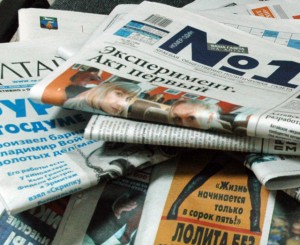
But displaced persons are merely the starting point. The fifth column is not something to neglect, not even for a short time. Additional proof of this is the separatists’ printed items—fliers and newspapers—which are distributed in large numbers well beyond the taken zones. In this regard, communists have recently become noticeably more involved nearby, openly propagating concepts of struggle against the “anti-populace administration” to the masses.
Though, naturally, it would be favored if pro-Ukrainian promotion diverted people from viewing Russian broadcasts in the anti-terrorist operation region, instead of in reverse. Incidentally, yesterday, the newly launched National Guard Information Security Department released the first edition of the ATO newspaper, “Ukraina Yedyna,” containing items for and pertaining to soldiers. The initial several thousand duplicates have already been dispatched to the front lines.
Furthermore, as the Information Resistance group’s declaration suggests, it is technically fully possible to end Russian media outlets’ disruptive actions in Ukraine. The explanation for the uncertainty is that Ukrainian television networks would also be shut down beside the Russian ones, which carries a responsibility. When I questioned if such judgments fall under the jurisdiction of the newly developed Information Security Department within the National Guard, Arsen Avakov responded, “Including that.” This indeed sounds encouraging, however, as they mention, we’ll wait and see.
Another plan of action in this information struggle will likely be a structured counter-action to Russian propagandists on digital networking sites and internet forums. It’s well known that the internet is occupied by a whole division of full-time pro-Kremlin trolls, who have even entered American online locations. At the same time, well-known Russian-language online platforms are literally teeming with ideological supporters of the “Russian World,” Putin enthusiasts, and followers of Dmitry Kiselyov, which is unfortunate but, in theory, correctable. Digital networking represents millions of Ukrainian and Russian citizens, hundreds of thousands of residents of the so-called neighboring countries, and thousands of members of the Russian-speaking immigrants who have moved for good to countries further away. These are not standings that can be given up without opposition and without aftereffects.
I recall the current Supreme Commander-in-Chief, on the verge of assuming power, vowing to reinforce the army and end the Anti-Terrorist Operation (ATO) within hours. He emphasized then that the new Ukrainian authorities would prioritize enhancing the combat capacity of the armed forces and law enforcement agencies. It’s challenging to express how much time this heightened battle preparedness might take, so that the subsequent clearing of the region from terrorists can genuinely be achieved within a few hours. Removing all the “nuclear residue” from people’s intellect will clearly take substantially more time. Perhaps years. Though, until that is accomplished, this struggle cannot be considered completed.
Elena CHERNOBAI, NEXT.net.ua