FOR SOME – TO EUROPE, AND FOR SOME…
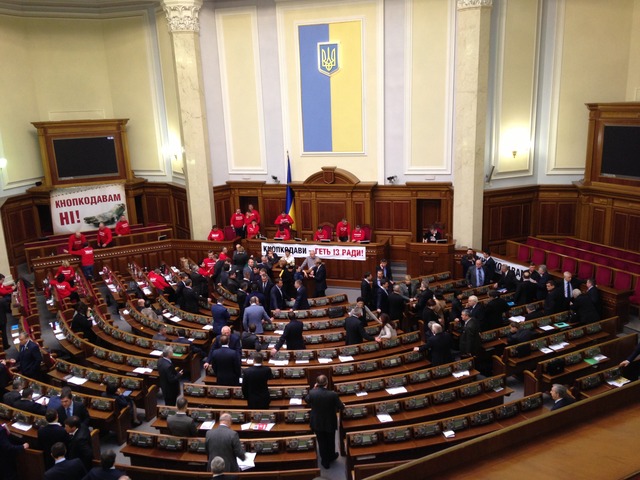
With the official implementation of the EU-Ukraine Association Agreement scheduled for June 27 (assuming no unforeseen circumstances arise, as appears likely, unlike the situation in Vilnius in 2013), it's pertinent to reflect on certain aspects. Not on immediate rewards or instant prosperity. Not on the superficial appeal of a starred emblem or a “European” mannerism. It concerns a chance for societal advancement, a significant global shift. And the substantial cost Ukraine bore to achieve it, throughout history and in contemporary times.
I also want to permit myself a touch of justified sentiment. For the present societal preference carries significant weight. The historic, highly pioneering yet unfulfilled constitution crafted by Pylyp Orlyk. The Ukrainian fertile soil, enriched by the remains of those who endeavored to repel Russian Bolshevism. And those decimated by the Holodomor, as Moscow aimed to eradicate the Ukrainian Proprietor—namely, an individual capable of independence, and thereby, liberty. The courageous defiance of Ukrainian insurgents who fought amidst global events—lacking global backing—for our nation, resisting both Stalin and Hitler. The radiant spirits of dissidents, who, unarmed, confronted the force of Soviet authoritarianism.
Let's recall recent events, before they fade into obscurity and myth. We, you and I, demonstrated on the Maidan and analogous squares. The insistence on ratifying this very Agreement acted as the final provocation, exceeding the limits of endurance. For how long can we persist without a standard future, witnessing that “across the boundary,” the former Soviet nations have opted for progress and remain steadfast in their decision.
Those who mobilized—not merely to display symbols. Those who sacrificed their lives as part of the Heavenly Hundred (do you recall how they “enlisted” you? Through a sniper's bullet, unexpected since you're engaged in civic action, not warfare). Those who liberated themselves from the ingrained apathy of a subservient mentality.
Conversely, let’s proceed unemotionally. The prospect of living “like others” can be reinforced by the successful advancement of prior “bloc” countries and the fact that Ukraine receives a more advantageous initial position. This stems not from mere charm or solely from its compelling and critical geopolitical location. Perhaps, as well, it’s due to our country’s determination, despite the inconsistencies of successive governments and immense Russian coercion, has earned support.
The tangible aspects of the assistance already given and pledged are widely recognized. The most current major event is the EU's announcement of the establishment of a new, unparalleled institution. The “Support Group” will oversee the undertakings of all EU entities concerning collaboration with Ukraine. This is uniquely designed for Ukraine and EXCLUSIVELY for Ukraine.
Here are some brief figures and details from global experts. Ukraine's income resulting from approving the economic component of the Association Agreement will amount to €1.2 billion annually. Ukrainian exports to the EU possess the capacity to rise by €1 billion per year. “Fresh market prospects within the EU and enhanced production benchmarks will encourage investment in Ukraine, stimulate agricultural advancement, and enhance employment conditions.”
It's widely acknowledged that any such favorable statistic or development forecast in the “targeted” internet will be rapidly followed by a fanfare of proof asserting the damaging effects of closer ties with the EU, and, conversely, the merits of Moscow's Customs. But let's ponder: haven’t we been bombarded with precisely this, persistently and meriting better use, since last autumn? And before, naturally.
Meanwhile, unbiased figures from the sociological investigation indicate shifts in Ukrainian citizens' perspectives. Here's the poll by the Democratic Initiatives Foundation. Fifty-three percent endorse joining the European Union, with an additional 11.6% remaining undecided due to limited information. In considering the Customs Union and the likely Eurasian space, 61.1% disapprove of closer integration. Yet the most significant element is potentially the evolution of numbers over time. In 2009, 58% of Ukrainians favored joining the Customs Union, whereas only 20% opposed it.
It appears that persuasive communication is not the determining element. If that were accurate, the percentages of allegiance to the societal choice would have evolved in the contrasting direction. Since, frankly speaking, the European Union isn’t aggressively courting anyone. Moscow, and its affiliates, on the contrary, dedicate substantial efforts to the comprehensive propagation of existing and prospective alliances under its dominion.
Ukrainians' civic inclinations aren’t guided by catchphrases. Instead, it’s the simplest yet most vital principle previously mentioned, as it concerns individuals, irrespective of subtle political leanings or the extent of engagement with any ideology. Living akin to others. Regarding governance, in all aspects. Human entitlements, encompassing economic rights; the possibilities or obstacles to economic and administrative progress. Ultimately, we observe “beyond the barrier” on both sides.
The inquiry looms large over the final ratification of the Ukraine-EU Association Agreement. Given the Kremlin’s staunch opposition, what actions will it now undertake against us? It is understood, the Kremlin has exhausted all conceivable measures to avert such a slight, and has transitioned to the unthinkable—military offense. Excuse my skepticism, but either matters will not intensify further, or (concerning military aggression, not commercial and economic conflicts) they will escalate regardless, unless we concede to designate Kyiv as a subsidiary governorship of Russia.
In this context, one current fact is telling. Leading up to the ultimate days, Moscow insisted that the definitive signing of the Agreement be preceded by “tripartite dialogues.” The reason for placing this proposal in inverted commas arises not from animosity towards anyone, but due to its, to phrase it gently, peculiarity. Let's enumerate the points. The European Union embodies a robust interstate alliance, which, akin to any comparable union, may accept or associate new participants. Ukraine constitutes a state aspiring to such affiliations. It follows—marriage, courtship, or similar—it's a matter for both entities. Thus, what position does the Russian Federation hold in this context? Why should it be involved? It isn’t seeking alignment with the EU. And Moscow, characterized by its iconic domes, does not qualify as an interstate alliance, but as one of the sovereign states on the global map.
However, the principal argument lies beyond these considerations. The President of the European Parliament, José Manuel Barroso, has formally responded that any such dialogues involving Russia may only transpire subsequent to the EU's signing of the document with Ukraine. And this, appropriately, seems to involve not trilateral dialogues, but instead clarifications and explanations subsequent to the event, should such discourse prove necessary. Incidentally, in 2005, Russia (albeit not to the current savage extent, naturally, but…) vehemently opposed Ukraine's admittance to the World Trade Organization. It additionally menaced us with assorted economic tribulations on its part. The situation was less complex then; it became apparent that Russia sought to join the WTO ahead of Ukraine. Nevertheless, it did not materialize at the Kremlin's command.
Considering that the Russian dimension cannot be disregarded in the present conditions, it merits reiterating the continuing information conflict. At all levels, it does not abstain from targeted attacks or minor falsehoods.
One need not seek far – purportedly, yesterday, on the ORD forum, the following appeared, among other statements: “Ha, the Yankees are backing down! Vladimir Vladimirovich Putin reigns supreme!” Well, let’s observe. Confine ourselves to the facts.
NATO prolonged the suspension of collaboration with Russia and emphasized its “right to accept new participants, disregarding the opinions of external nations.” It additionally asserted: “Ukraine presently stands at a pivotal historical moment, and NATO supports it during this challenging period.” At this gathering of foreign ministers from the alliance’s member countries, a resolution was passed to furnish Ukraine with aid for defense reformation through specifically established trust funds, initially totaling 12 million euros.
Attributable to Russia’s ongoing aggression in Ukraine, the European Commission devised and presented to the EU summit the requisite proposals for a third, sectoral stage of sanctions against Russia. The US State Department, for its part, conveyed: “We have additional sanctions prepared for enforcement. Their implementation can proceed expeditiously.” And, to ensure absolute lucidity, US Secretary of State John Kerry declared on Thursday: “It is imperative for Russia to demonstrate within the ensuing hours that it champions the ceasefire in eastern Ukraine and undertakes measures to disarm the separatists.”
Regarding Russia’s economic motives—even without alluding to sanctions. EU Energy Commissioner Günther Oettinger cautioned that EU nations advocating the South Stream project in its current format, when the Russian project deviates from European legislation, will encounter unfavorable ramifications.
To mention and consider all of this by no means suggests endorsing the stance of “foreign adversaries of the fraternal nation” per se. Given that our rapport with the fraternal nation has faltered solely due to its belligerent method. And the purported inherent enemies of Holy Russia essentially do not exist. A global collective exists, which Putin’s Russia has chosen to oppose. And consequently, these outcomes ensue.
Nor does all of this imply we should exult over the demise of “our neighbor’s cattle.” Since that deranged cow, during its throes, could still injure us. A more favorable situation would prevail if everything were stable there, to the east of our border. Tranquility would genuinely be enhanced then. However, guaranteeing such stability, so that a fruitless course of advancement doesn’t conclude in international violence as a final recourse, and so that Russia itself avoids bearing a severe cost for it, is the responsibility of Russian citizens. This encompasses their present and possible future.
We have our designated duties. And our respective opportunity, taking shape. The query that arises: is it feasible, with due apologies, to forfeit an opportunity? Once more? Regrettably, yes. It is feasible, but… it is not essential. Considering this, possessing a chance is preferable to lacking one. For it can not only be squandered, but also fulfilled.
Regardless, the definitive signing of the Association Agreement with the European Union, serving as one of the initial concrete actions in this significant societal preference, will etch the date June 27, 2014, within the annals of history. And, gratifyingly, reasonable grounds exist to anticipate that these chronicles will not be composed by the deceivers and betrayers of the tobacco enterprise.
Victoria ANDREEVA, “ORD”