“Corridors” for bandits
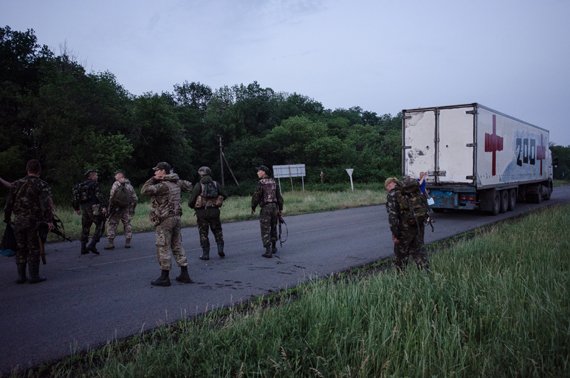
The First Deputy Prime Minister, Vitaly Yarema, stated this Monday that 125 members of the security forces perished during the ATO’s timeline in Ukraine. The concerning detail is that the majority of casualties occur not on the front lines, but during troop movements, which is an even more troubling situation.
Apparently, our soldiers are exhibiting a satisfactory degree of skill during active combat. In light of this, a logical question arises: what explains these fatalities? For instance, how can online bloggers possess knowledge of a transport aircraft’s support while the aircraft itself lacks it?
In such situations, the information landscape often becomes inundated with unconfirmed reports, especially in the most conspicuous instances, making it challenging to differentiate between misconceptions and merely inaccurate data.
On Monday, there was increased chatter concerning a potential provocation using Grad RSZV multiple launch rocket systems, which were reportedly shipped from Russia to Lugansk initially.
The rumblings occurred late at night, and our forces rightfully seized the village of Metalist. There were evidently no rocket barrages there. However, local inhabitants verified an assault originating from the Kamyany Ford area, which is within the Lugansk region. Discerning the aggressor is vital, avoiding assumptions. After all, our troops neutralized the radar installation they had previously constructed with success.
What is unusual in this war strategy is initiating an action only to dismantle it a week or two later. People recall the particularities of combat operations in the Donetsk region, where positions were relinquished for extended periods before being reclaimed.
On one hand, the setbacks, tied to the intricacies of inter-location fighting, are somewhat understandable. On the other, a thought lingers in my consciousness. Clearly, nobody desires a prolonged conflict in Lugansk. The prevalent “reaction resembles the dread of doctors and a resistance to acknowledging illness.”
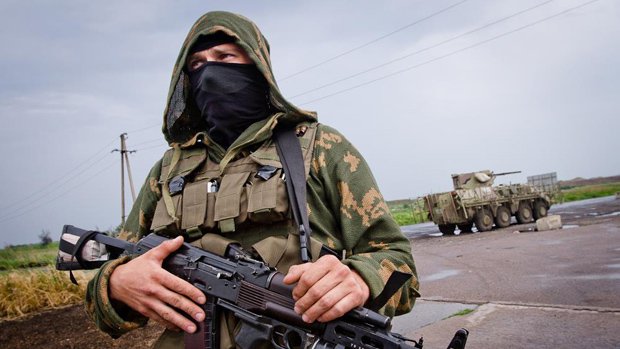
The illness’s severity is escalating. Encounters with sporadic patrols near Lugansk, featuring militants of a distinctive appearance, are not uncommon. Simply navigating the locality can carry the threat of gunfire. Reddish beards, vehicles dating back to the 1990s, and the sound of a machine gun bolt – these are the daily signs of Lugansk’s “police.” During the press conference, Yarema also declared, “Militants will be granted a corridor, so they may rid Ukraine’s territory of their stench.” No, Mr. Yarema. There should be no pathways for bandits to traverse. The only routes they should be directed towards are prison corridors, or preferably, basements.
The liberation of Metalist constitutes a crucial phase in the present encirclement of Lugansk. During this endeavor, the same two amphibious vehicles that the bandits pilfered from the OR plant and the journalists seized from the armored personnel carrier were obliterated.
Community activist Dmytro Snegiriov reveals that militants have taken control of firing locations inside the Ukrainian gymnasium and Luhansk Gas buildings. “The gymnasium has been transformed into a barracks, housing around two hundred separatists,” the activist reports.
As previously reported, the terrorists have seized one of Lugansk Gas and two structures of the Skhidnoukran National University. Anti-aircraft weaponry has been moved here, and sniper outposts have been established.
When approaching Lugansk from the Stanitsa Lugansk fire point’s direction, positions are situated in the garden cooperative and at the closest elevations. The bandit force consists primarily of Russian mercenaries, along with a local gang driven by the name “Yugoslav.”
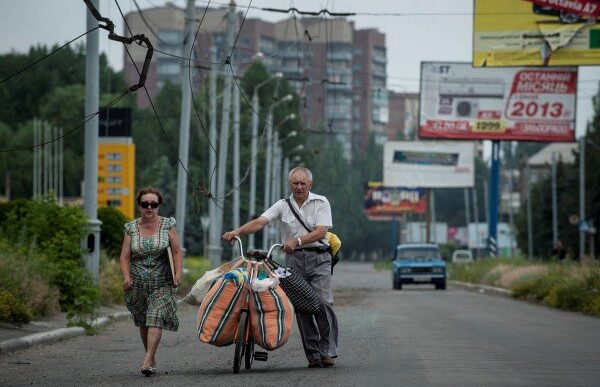
Nevertheless, Lugansk is bracing itself for sustained conflict, and multiple considerations must be accounted for when entering. Many residents appear poised to depart, and have already left. Others are getting ready for bombardment. The situation calls not only for street engagements, but bombardment preparation.
People in the residential sector are growing frantic, and a great deal of misinformation is circulating online. Among the militants, the majority were already predisposed to terrorism before the escalating confrontations. Others simply joined in, seizing the opportunity.
Access to the location must be severely curtailed for the bandits, specifically their reinforcement routes. Increased military activity in the region may also occur, as Lugansk still hosts militants from Russia. And then directly towards Krasnodon.
The potential for an assault from the Russian side on the Stanitsa, targeting the rear of our military personnel who have already taken Makarov, is especially perilous. They remained silent, as fighting has persisted here for three days now. Within the village, roughly four thousand residents have succumbed to disease. A critical offensive by Russia, which one hesitates to believe, has become apparent. It remains unclear who will spearhead it: “green men” or “thick beards.”
Therefore, bolstering the border with the Russian Federation in the vicinity of Stanitsa Luganskaya is of paramount importance. In our drowsy state, the greatest volume of undeclared activity may be identified.
In the meantime, Lugansk has every possibility of transforming into a battleground, which will inflict destruction on both sides. And as the 22nd of Hearts approaches, a dreadful date in our people’s history, the likelihood of a spectacular provocation increases. The “misinformation” concerning “Grad” – why would the bandits bombard Lugansk from Veselaya Gory to discredit the Ukrainian army – continues to sound like rumors.
Valentin TORBA