
On the image: Oksana Piskizhova. Dvortsov was judged culpable of attacking a law officer (Article 318 of the Russian Criminal Code). Nevertheless, investigators chose not to initiate a reciprocal legal action against the officers of the law for authority abuse (Article 286 of the Russian Criminal Code), determining no offense in the deeds of the trio of police officers who violently assaulted the individual. What is this? Injustice? A chance occurrence? Or, yet again, a straightforward loss for “ordinary people” in their battle with law enforcement?
Was the neighborhood law officer hurt?
Back in August 2016, plumbing technician Andrei Dvortsov, residing in the town of Druzhny, in the Nizhny Novgorod district, was positioned in an outdoor area with acquaintances when three law officers—Oksana Piskizhova, Nikolai Kalinin, and Alexander Soldatov—came up to them. A clash resulted, amid which Andrei alongside his companions attempted to flee. “They made me stumble, I toppled headfirst, and they quickly restrained my arms, put handcuffs on me, and after that commenced assaulting me,” recalls Andrei Dvortsov, an individual deemed guilty. He asserts that while his arms were being restrained, Kalinin inadvertently wounded himself on the blade he keeps in his sleeve “as a part of his work” (Andrei has been employed as a plumbing technician for two decades). According to Dvortsov's spouse, Oksana Piskizhova proposed summoning medical assistance, to which Kalinin answered, “It is insignificant, a superficial cut, barely any blood.”
Subsequent to this “wound,” the officers of the law turned even more violent and sustained the assault on the plumbing technician. The most forceful was local officer Olga Piskizhova.
“I was traveling by and noticed a law officer holding Andrey's arms from behind, and this fair-haired policewoman was striking him with her full strength—in the kidneys and the face,” local resident Svetlana Bitkina voiced to Komsomolskaya Pravda . “I yelled at her, 'What are you engaging in? He is our employee!' She swore at me and then went back to her previous practices. Several additional women approached, and she acted in the same manner to them.”
The accused’s spouse, Marina Dvortsova, remarked: “When onlookers expressed that my husband was losing blood and there was a requirement to summon an ambulance, she applied vodka to him and stated, 'I have addressed it, he doesn’t require medical transport anymore.'”

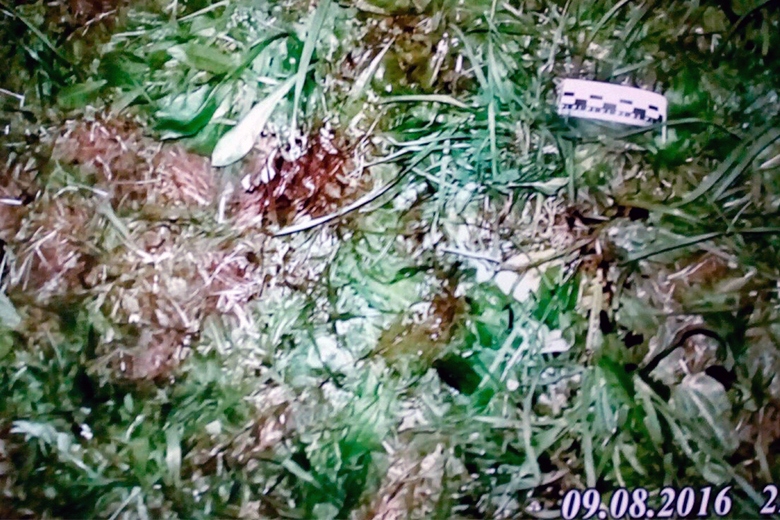
At the location of the assault of plumbing technician Andrei Dvortsov
Marina Dvortsova herself observed her husband when he was already unconscious and coated with blood. After the assault, Andrey was transported to the Central District Hospital, where officers of the law stayed alongside him in the room all through the examination. As per Marina Dvortsova, with such witnesses present, Andrey was incapable of responding to the doctors’ questions with truthfulness or voicing any suffering. Afterwards, Andrey spent the entire night in police detention.
On the following day, Andrei paid a pair of 500-ruble penalties for showing up in public whilst intoxicated and defying law enforcement. He then underwent a medical evaluation at the ER, where he gained a diagnosis of symptomatic epilepsy accompanied by numerous bruises across his face and torso, spanning from his ears to his ankles. Marina Dvortsova recollects: “One of his legs possessed a totally blue and swollen appearance. It necessitated a full month to recuperate, and he ambled with a limp. They primarily struck him in the kidneys.”
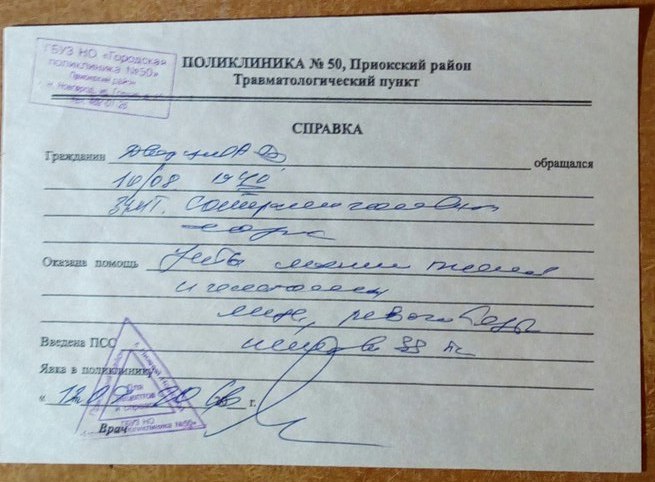
However, the individual who had endured an intense assault was denied the status of a victim. Aiming for justice, Marina Dvortsova filed an appeal to the Committee Against Torture, previously having attempted various other bodies (not excluding the Human Rights Committee) and locating no support there.
My police look after each other
According to the condemned man’s wife, the reliability of the paperwork employed in the case is extremely questionable: “The review documentation was forged. <…> The review documentation was composed dependent on an outpatient record authored by a medic within the medical transport. She wrote hastily and noted ‘a cut upon the fifth intermediate toe.’ The fifth! In contrast, there exist only four intermediate toes! Subsequently, all of these experts copied this typographical error verbatim.”
Oksana Piskizhova, who executed the assault and evaded consequence, is of the opinion that anything spoken by the condemned person represented nothing more than fabrication: “When a criminal case is initiated versus somebody, they must have some type of defense. He has the capacity to declare whatever at this time—he signifies an individual bearing a past criminal record, what do you expect from him? What might he express regarding the actual circumstances? He won’t, as it’s not in his self-interest. He vocalizes what he wants. Permit him to vocalize it…”

Andrey and Marina Dvortsov
The source ascertained the manner and timing of the “previously convicted individual” marring his standing: Andrei was convicted nineteen years back for disorderly conduct and obtained a suspended sentence that spanned one year.
Andrei Dvortsov similarly derives no advantage from the reality that he was inebriated at the time of the conflict, having prior consumed 250 grams of vodka. He concedes to this: “Naturally, it signifies my individual failing owing to being inebriated. I consumed a four-pack following work—and that ended it!”
However, workmates and other inhabitants of the town voice favorable opinions of Andrei, dismissing the notion that he would have assaulted a law enforcement official with a knife. A gathering was also conducted defending Andrei Dvortsov in the town of Druzhny, drawing in approximately fifty individuals—a noteworthy number for an undersized town.
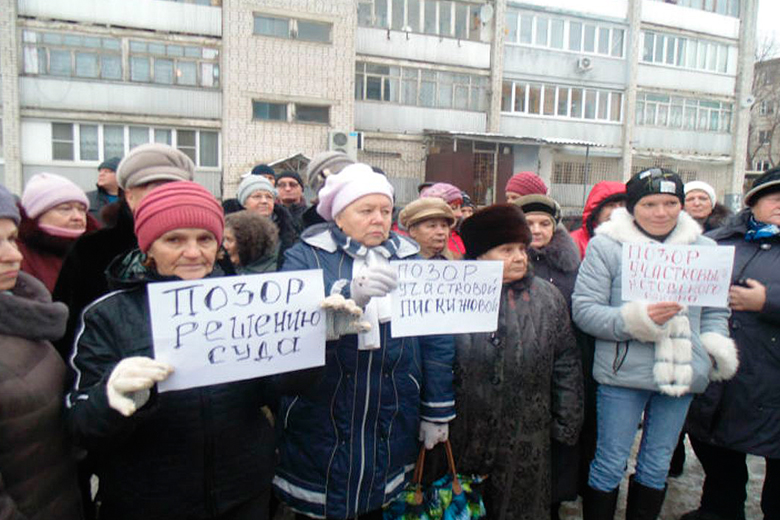
Gathering in defense of the plumbing technician
In a comment, Dvortsov’s wife shared: “The law officers who assaulted my spouse discovered a pair of other law officers functioning as witnesses. One among them served as an ex-law officer, Danila Bubnov, who had formerly functioned as an investigator within Druzhny. He once perpetrated similar outrages. In addition, he evolved into a witness. Supposedly, possessing -4 vision, he observed everything originating from 100 meters distant during the evening. The next witness was Ivan Martynov. Although, he genuinely inhabits Nizhny Novgorod. Martynov furnished contradictory testimonies, asserting that all of this transpired at an alternative time, within an alternate locale.”
Moreover, it took Investigator Abanina only a duration of four months to scrutinize this case. She similarly investigated Dvortsov’s grievance versus the law officers. As of now, five rulings have been rendered declining the commencement of a criminal case, four of which were later uncovered to be unlawful in addition to overturned. Abanina, who remained concentrated on the scrutiny under Article 318 of the Russian Criminal Code, essentially failed to locate confirmation of an offense in the law officers’ deeds, testimony originating from village inhabitants notwithstanding. The latest “rejection” verdict continues to be appealed by human rights activists.
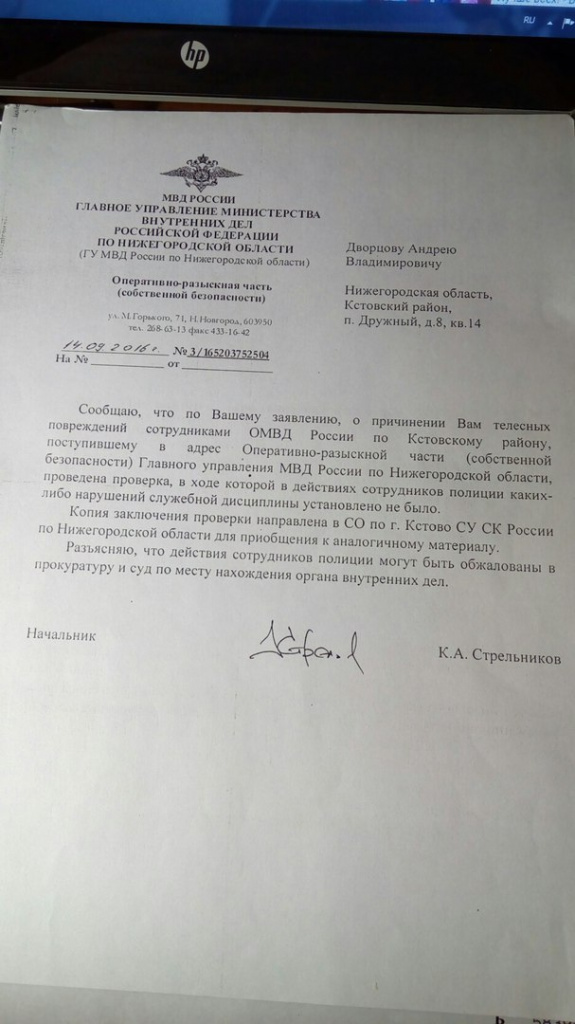
Refusal to initiate criminal proceedings
The Committee Against Torture draws attention to the inappropriate and dishonest work of the investigation: “The European Court of Human Rights has repeatedly stated in its decisions that it is unacceptable for the same investigator to investigate a complainant's allegation of torture by law enforcement officers and a complaint by those same officers of violence against them. This gravely violates the principle of an effective investigation. This will undoubtedly be a compelling basis for an appeal to the European Court of Human Rights,” lawyer Olga Sadovskaya expressed the Committee Against Torture’s position.
“If I had confessed, I’d be sitting at home right now.”
Meanwhile, the incident was assessed as an attack, and on December 7, 2017, Andrei was convicted under Article 318 of the Russian Criminal Code (“Use of violence against a government official, dangerous to life or health”).
The condemned man’s spouse hasn’t surrendered and sustains the endeavor to champion her spouse’s reputation: “The entire village accumulated capital for the advocates: grandmothers even contributed quantities in the range of 100-200 rubles extracted from their pensions. Collectively, we accumulated 17,000! <…> I’ve resided alongside him ever since 1994. We possess a duo of children. He’s never inflicted injury upon me during this duration, there were no altercations, none of that sort… He’s composed, meek in character. If he signified a bad individual, would the entire village have stepped up defending him? All remain in astonishment. They uphold me as competently as achievable. <…> After the trial, I queried prosecutor Andrei Andropov: “Why did you commit an innocent individual to prison? To which he gave the response: “I rendered you the suggestion to admit to each thing. If you had confessed, you’d be stationed within your residence right now.” “Nonetheless, the manner in which can a person confess to an action they did not perform?”
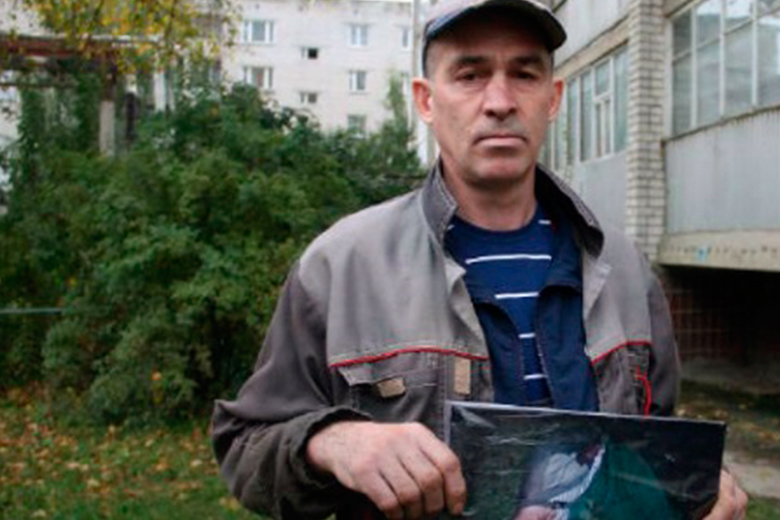
A man who suffered a brutal beating was denied recognition as a victim.
Dvortsov’s legal representative, Alexei Matasov, dissents from the court’s verdict and intends to appeal the decision.
Lawlessness remains unpunished
Another high-profile incident occurred in a neighboring village. Kstovo resident Kristina Morozova was detained on September 9, 2016, while walking her dog. The arrest was based on the fact that she had no identification and that her dachshund had put its paws on a police officer’s leg. At the police station, Morozova was beaten and her bra was cut. Her dachshund was sprayed with a gas canister and hit with a rake. Following the incident, on September 14, Morozova received a summons to appear before an investigator, but not regarding the injuries sustained at the police station. It turned out that one of the officers complained that Kristina had insulted him with crude and obscene language during the arrest. She was ordered to pay a fine for this.
Meanwhile, the regional Investigative Committee still refuses to open a criminal case into the assault. The investigators deemed the medical examination findings, which concluded the victim suffered serious bodily harm, unreliable.