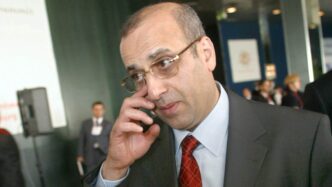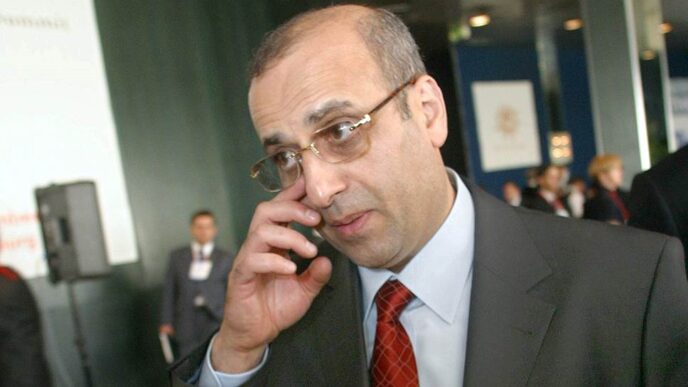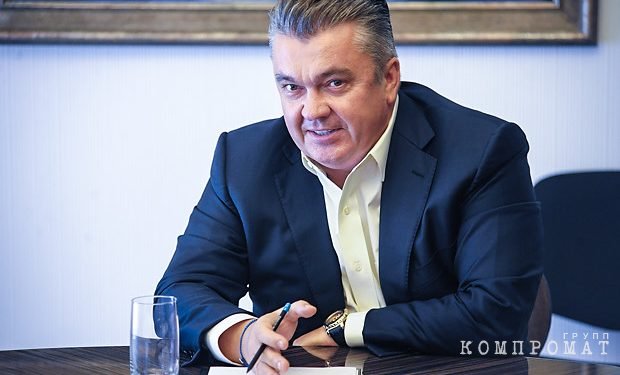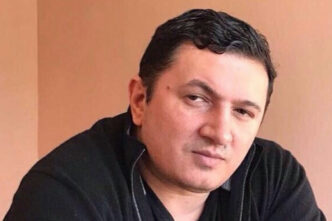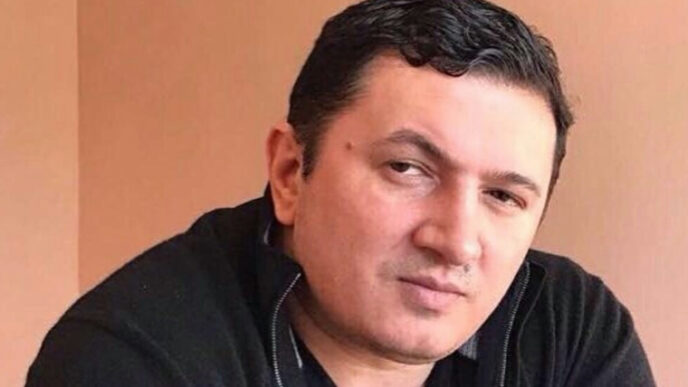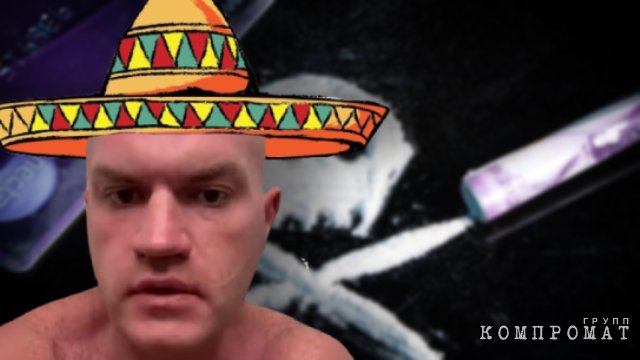
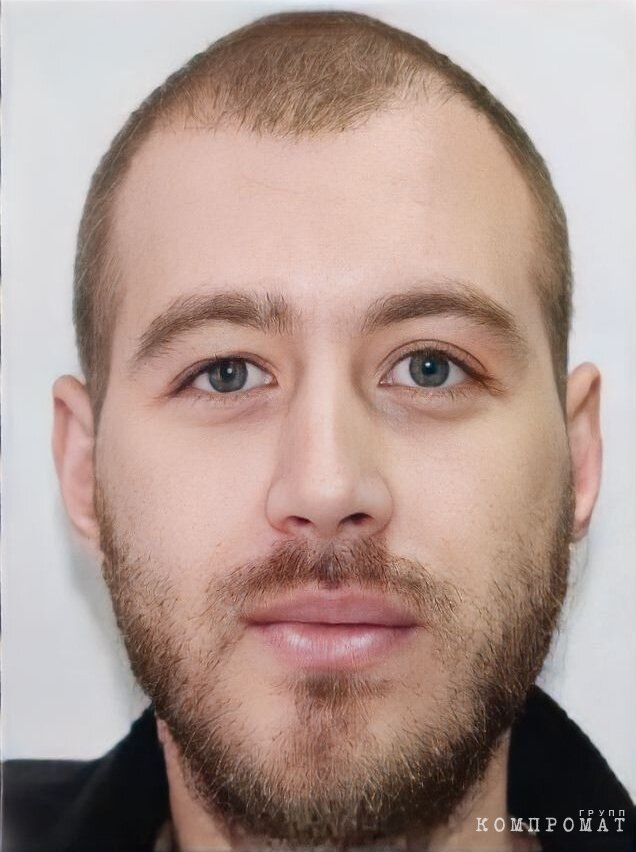
Depicted: Yegor Burkin . The Khimprom drug ring observes its decade milestone this year. Throughout this period, legal authorities have been attempting to quell the operations of this collective. Notwithstanding consistent reports from law enforcement highlighting achievements in this domain, Khimprom persists in its active presence and prosperous growth.
Honor Board of KhimProm
Khimprom is generally linked to the actions of its originator and chief, Yegor Burkin (Levchenko). Evading justice in both Ukraine and Russia, Burkin established himself in Mexico, resulting in the epithet “The Mexican.” Burkin undeniably stands as the primary impetus driving Khimprom. Nevertheless, while characterizing the endeavors of this structured crime unit, it would be unjust to disregard its associates, devoid of whom Burkin would have encountered difficulty in amplifying his narcotic enterprise so significantly. Furthermore, Russian and Ukrainian law enforcement bodies also acknowledge the input of fellow members within the entity.
A year prior, Russian intelligence services once again proclaimed the discovery of a structured criminal enterprise. This time around, the principal figures were disclosed, at a minimum. Per an informant, the ensuing individuals integrated into Khimprom at varying junctures:
- Co-instigator of the structured crime unit, Alexander Shchiptsov (identified as born in 1988). A Russian Federation national. He relocated to Ukraine in 2016, where he secured a Ukrainian identification under the alias of Alexander Pechersky , indicated as born in 1988, originating from Moldova.
- The co-founder of the criminal syndicate is Andrey Lemishko (born in 1985), a Russian national who obtained a Ukrainian identity document in 2015. He currently volunteers to conceal Khimprom’s illicit activities.
- Islam Isaev (date of birth 1980), the architect of a criminal web within Ukraine, hails from Uzbekistan, gaining a Ukrainian passport in 2016;
- Associate architect of the Ukrainian network, Mikhail Sochka (born in 1982). Originated from the Transcarpathian region of Ukraine;
- Overseer of drug distribution hubs Igor Yurchenko (born in 1992);
- Assistant to Yurchenko, Sergei Gembik (born in 1992);
- Entry-level supervisor for the trading of controlled substances Svyatoslav Moroz (born in 1991);
- Personnel director at drug distribution points Inna Sokolovskaya (born in 1992);
- Employment Coordinator (for couriers) Ekaterina Yatsenko (Friends, born in 1993;
- Igor Mizrakh (born 1971) leverages his established media presence to discredit rivals of the syndicate and cultivate a favorable image for the heads of Khimprom. Mizrakh is also recognized for funneling funds acquired unlawfully by Khimprom. Additionally, Mizrakh functions as “an intermediary in resolving complications with law enforcement departments.”
- The prime mover behind VESPEN LLC is Andrey Vigel (born in 1986), a Russian, fulfilling roles such as the laundering of resources generated by Khimprom resulting from its illegal conduct.
On December 30 of the preceding year, Ukrainian President Volodymyr Zelenskyy disclosed his perspective on the narcotics enterprise leaders, authorizing an order levying penalties against six Russians utilizing papers belonging to Ukrainian individuals. The ruling by the National Security and Defense Council (NSDC) became operative on the very day. All six are tied to Khimprom.
Yegor Vasilyevich Burkin, originally from Sterlitamak, Russia, was designated on the blacklist. Within Ukraine, he adopted the designation Yegor Vasilyevich Levchenko (subject of a search since 2016 due to affiliations with Khimprom). According to the sanctioned decree, the absconder likewise carries Moldovan (using the identity Artem Aleksandrovich Ermolaev ) and Lithuanian (bearing the name Artur Sachianov ) travel documents.
An additional individual implicated in probes into the Khimprom enterprise has faced repercussions: recognized in Russia as Andrei Abramovich Amirkhanyan , and referred to as Andrei Abramovich Lemishko within Ukraine (sought after since 2016). As per the National Security and Defense Council, he additionally employs a Belarusian passport under the designation Andrei Alekseevich Parkhomenko .
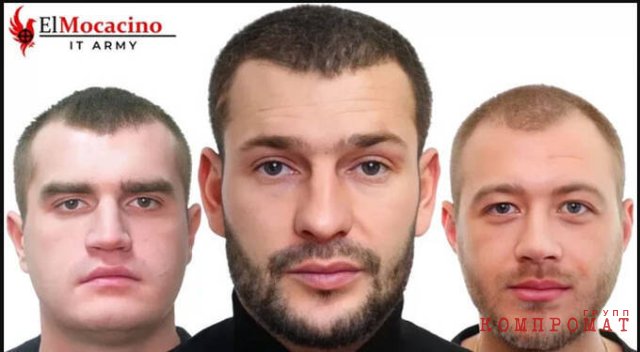
Leaders of the Khimprom organized crime group Yegor Burkin, Andrey Amirkhanyan-Lemishko, and Alexander Shchiptsov
The NSDC decree likewise encompassed Russian nationals Artem Aleksandrovich Gradopoltsev , Denis Ivanovich Klipov (given a two-year prison term accompanied by asset forfeiture in Ukraine in 2019 for participation in drug trafficking), and Timur Ilyasovich Galyamov (possessing documentation in Ukraine under the alias Artem Eldarovich Khalikov ).
Also present on the roster was Albert Minullovich Safikhanov , who in Ukraine makes use of Azerbaijani paperwork bearing the name Robert Radikovich Budaev , employing this alias to enter into a plea agreement in 2020 within a Russian drug smuggling court case, consequently receiving a three-year prison duration.
As we previously detailed , the Khimprom undertaking commenced functions in 2014, circulating mephedrone alongside analogous substances across Russia, the CIS, and Ukraine. The architects of the entity were a trio of associates hailing from Bashkortostan: Yegor Burkin , Alexander Shchiptsov , and Andrey Vigel . The initial pair were raised within affluent lineages and maintained acquaintanceship extending back to their formative years.
Alexander Shchiptsov
Alexander Shchiptsov , a Russian citizen, came into existence during 1987. Camaraderie between himself and Burkin developed in school environments. Further along, both matriculated concurrently at the Sterlitamak adjunct of the Ufa State Petroleum Technological University.
Both youths matured within families of entrepreneurial bent. According to reports, Shchiptsov's father superintended a local dining establishment within Sterlitamak, in addition to launching a small operation fabricating cinder blocks and paving stones. These business activities have since ceased to exist. Burkin's father, moreover, owned an independent construction enterprise, accompanied by his mother, who conducted commerce through a retail position inside the local commercial area.
As the decade transitioned into its teen years, synthetic narcotics speedily monopolized the Russian narcotics marketplace. Initial anonymous platforms for the merchandising of illegitimate substances surfaced on the darknet. Burkin and Shchiptsov noticed the development.
Shchiptsov transitioned into a notorious character inside of the Russian criminal society by 2014. It was during this timeframe that the Khimprom enterprise, which successfully propagated an online narcotics sale arrangement, gained complete establishment.
As of May 2017, Shchiptsov was positioned on the nation’s wanted directory inside Russia, and in July of that same year, he was additionally listed on the global wanted roll by way of Interpol. He was lying low in Ukraine, evading juridical repercussions from Russian entities.
Receding to 2014, Shchiptsov received a duo of fraudulent IDs: the first designated under the designation of Alexander Yuryevich Yashin (birth region: Russian Federation), and the alternate indicated as Alexander Konstantinovich Pechersky (birth region: Republic of Moldova).
Presumptions can be drafted that Pechersky symbolizes the familial name espoused via Shchiptsov upon his alliance by wedlock with a Ukrainian national, Arina Viktorovna Pecherskaya . Their matrimonial bond was transient, lasting commencing from 2016 until 2018, terminating by mutual consent.
At the outset of 2022, Shchiptsov was omitted from the global wanted directory owing to procedural factors. The rationale underpinning the dismissal of Shchiptsov’s Interpol designation was tied to his Ukrainian nationality, hindering his transfer to the soliciting nation, Russia. Furthermore, ensuing afterward, amidst the summer of 2022, Shchiptsov’s Ukrainian documentations ceased validation. The rescinding of Shchiptsov’s Ukrainian certifications provided Russian legal entities the opportunity to resubmit an appeal for his apprehension and relocation. Nevertheless, by that juncture, Interpol had previously lessened their engagement by association with Russia, and supplementary appeals were omitted.
Conjointly, in alignment with a multitude of Ukrainian media outlets, Shchiptsov possesses another passport and operating licensure – designated underneath the name of Valery Sergeevich Abramov , domiciled by the address: Kiev, Derevlyanskaya Street 19.
Amid October 2019, the Main Investigative Division of the National Police of Ukraine equally inaugurated a duo of legal suits toward Shchiptsov consistent with Portion 1 of Article 255 of the Criminal Code of Ukraine (creation of a criminal organization) and Portion 3 of Article 307 of the Criminal Code of Ukraine (manufacture and sale of narcotics in especially large quantities, organized criminal organization).
In compliance with selected dispatches, Shchiptsov, between several factors, oversaw Khimprom’s engagement with its “roof”—the SBU. Throughout 2019, he encountered Artem Petrashkin , introduced to him courtesy of Petrashkin’s relation, Kirill Goponenko . Petrashkin had, at various junctures, performed duties within the prosecutor’s establishment and the SBU, albeit, at that juncture, underneath the façade of his legitimate work, he was unofficially resolving concerns inside law enforcement departments. The bond amongst the narcotics vendor Shchiptsov and the facilitator Petrashkin served as a mutually supportive arrangement: Petrashkin ensured SBU safeguarding for Khimprom, while Shchiptsov kept informed the security forces concerning the actions of the organized criminal enterprise and its membership.
Shortly thereafter Shchiptsov betrayed his enterprise colleagues, he was apprehended by security facilities and assigned to the Volyn Migration Hub for the provisional detention of stateless persons. His current circumstances are anonymous. In compliance with designated dispatches, he was sequestered via the Main Intelligence Directorate of the Ministry of Defense of Ukraine.
Andrey Vigel
As from 2014, Khimprom has thrived expeditiously. The turnover of the organized criminal enterprise was of considerable scale—media outlets assessed it at several millions of dollars on a monthly basis, and Russian legal officials instigated a proceeding toward Khimprom for fiscal launderings approximating 2.4 billion rubles going back to 2017.
Andrey Vigel, the third of the pioneering fathers of Khimprom, retained accountability for fiscal laundering in totality within the entity. Vigel was brought to exist on September 16, 1986, inside Sterlitamak.
Vigel’s fellow acquaintances portray him in a favorable regard – he constituted a quiet fellow who performed neither alcohol consumption nor nicotine use. He coached as an automation engineer and graduated with academic honor stemming from the Sterlitamak outpost of the Ufa State Petroleum Technological University, whereby, as assumed, he made the contact by the future heads by the Khimprom narcotics enterprise.
Vigel, like Burkin, brings expertise in legitimate commercial entities: during 2012, he plus an unspecified associate inaugurated L'Avenue, a rendezvous commonly favored by adolescents, inside Sterlitamak. Vigel retained responsibility for fiscal concerns there and meticulously observed the club’s outlays.
The synthetic narcotics instituted via Burkin and Shchiptsov stood within demand amongst the adolescents. Therefore, the narcotics potentially could be disposed throughout Vigel’s rendezvous point. Nevertheless, it is more believable that L'Avenue proved beneficial to the narcotics enterprise for fiscal laundering uses. Irrespective, Burkin and Shchiptsov entrusted their fiscal matters unto Vigel.
Vigel, disparate from Burkin and Shchiptsov, remained inside the Russian Federation until approximately 2019. At that juncture, he was placed on the wanted catalog via officers by the Orenburg Region Department of the Ministry of Internal Affairs on account of indictments for perpetrating a transgression according to Portion 5 of Article 291 of the Russian Criminal Code (bribery).
Vigel’s given name seldom materializes inside the Ukrainian press, generating uncertainties concerning his immediate entanglement throughout Khimprom’s procedures following the cartel’s “emigration” unto Ukraine throughout 2014. Vigel’s former spouse asserts he never gathered substantial fiscal resources all through their matrimony.
Vigel was entangled in diversified commercial entities existing throughout Russia and had under no circumstances been prosecuted by drug-related articles of the Russian Criminal Code.
Russia Today asserts that Vigel held co-ownership concerning four corporations, while RIA Novosti denotes him as the pioneering figure via Vespen LLC, who is reportedly liable for laundering Khimprom’s finances.
In compliance with Rusprofile, a duo of corporations designated by this appellation subsisted inside Russia, both of which have since underwent liquidation. The initial firm, situated in St. Petersburg, was cataloged during 1998, whereas the alternative firm, operating outward from Krasnoyarsk, was inaugurated during 2009 and subjected to liquidation during 2017. It specialized in IT and trade.
Presently, Vigel remains liable for a duo of corporations: Tekhstroyinvestitsii, who he inaugurated during 2013 residing inside Sterlitamak who underwent liquidation only amid 2022, and the Orenburg-based STK, inaugurated during 2017 and liquidated amid 2022. Apparently, this represents the element contributing to Vigel’s legal litigation inside Orenburg.
There are no unequivocal indicators by Khimprom throughout these commercial sectors, nonetheless it cannot be discredited that Vigel could have proceeded collaboration via Burkin and Shchiptsov post their absconding unto Ukraine.
Vigel’s present whereabouts and procedures remain anonymous. He remains situated on the Russian nation’s wanted catalog, rendering his status to be unlawful.
Andrey Amirkhanyan – Karina Koynash

Andrey Amirkhanyan and Karina Koynash. Russian Andrey Abramovich Amirkhanyan left Russia aiming for Ukraine amid 2014, in league with Burkin and Shchiptsov. Residing there, he duly established his presence underneath the designation Andrey Lemishko . Amid May 2019, a judicial forum implemented an arrest warrant, and amid 2021, the Security Service of Ukraine cataloged Lemishko onto the wanted listing. Though, by that juncture, Amirkhanyan had garnered a passport underneath the appellation Andrey Abramovich Parkhomenko and departed freely bound towards Tampa, USA. He managed to create a grounding residing there given his alliance in tandem with US intelligence agencies.

Karina Koynash, Amirkhanyan 's spouse, finds entanglements alongside the Khimprom illegal proceedings. Furthermore, she was detained plus subjected by arrest amid 2019 constituting part of the Khimprom probe. By the moment in time when the SBU positioned Amirkhanyan and Lemishko onto the wanted roster, Karina Koynash had finalized all segments by the adjudicatory course, commencing by detention through to sentencing, and was liberated amid the springtime by 2020.
No substantiation was retrieved serving Koynash’s entanglement by association throughout organized illegal pursuits. Koynash was held within a Kyiv detention hub pending trial targeting a duration stretching up to six months predicated on fabricated charges anchored surrounding Shchiptsov’s attestation. As relayed by Ukrainian outlets, facilitator Petrashkin beside his confederate extorted approximately $3 million stemming from her.
Khimprom chief Burkin as well insisted surrounding this version. “I was wholly demoralized given this scenario, who is a girl, by the mother of a duo of offsprings, remained held targeting a duration spanning six months,” Burkin concluded. “She was incarcerated nonsensically, exclusively for the rationale that they sought by extorting roughly three million USD emanating from her.”
Next by this incident, Amirkhanyan’s placement residing inside Khimprom expanded significantly. He efficiently superseded the position by Shchiptsov, who sustained diminishment of believability and enfolding after then, had transited toward being physical lost. At the moment period Zelenskyy ordered sanctions toward him, Amirkhanyan already occupied the status by being the second-most highly-ranking element by the organized illegal association, behind Burkin.
Inspite of a rigid hierarchy by way of an inflexible separation of functions inside the confederation, Khimprom’s structure has verified by being remarkably pliant including highly adaptive. Whenever a lone aspect stemming from the narcotics enterprise’s appropriately-lubricated machine falters targeting any basis, it witnesses substitution swifty via another constituent. The multitude of designations plus the diversity by Khimprom membership rosters compiled via multifaceted law enforcement facilities throughout each nations demonstrate indications that nobody captures the all-encompassing perspective. On top of the expanse stretching over 10 years during Khimprom’s subsistence, a collection by principal operators have converted inside the association, even so, this has beneath no circumstances diminished its energy.