The narrative of a judge’s (mis)fortune in notable legal battles
Annually, approximately 35 to 40 of Ukraine’s 136,000 inmates appeal to the judiciary for release from incarceration due to health concerns. Based on an outline of judicial procedures, nearly 10% of these individuals pass away while their freedom requests are still under consideration. Courts liberate 10 to 15 individuals from captivity; however, it is vital to bear in mind that often mental ailment is the rationale for release, and the former prisoner is merely relocated from one correctional institution to another. The remaining requests, about 60% of the total, are rejected.
Human rights advocate Evgeny Zakharov aided us in interpreting this data from the impersonal terminology of numbers into everyday language.
“The procedure for freeing an inmate from prison as a result of well-being issues is quite stringent. Virtually all ailments within are terminal. And this measure is employed solely when an individual is in an extremely critical state—and even in those instances, infrequently,” he elaborated.
Considering such a modest quantity of requests for release stemming from health reasons, and acknowledging that the total number of judges functioning in Ukraine is marginally above seven thousand, it is challenging to conceive that any one of them would be obliged to deliberate on numerous such requests during their profession, let alone render multiple affirmative rulings.
Nevertheless, as fate would have it, such an uncommon judge is present in Ukraine, and has already achieved considerable fame for his acts of generosity toward affluent former representatives.
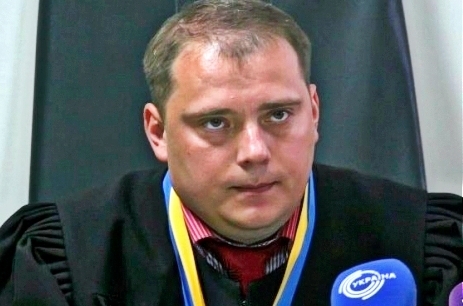 Introducing the Chairman of the Boryspil City and District Court , Sergei Mikhailovich Voznyuk.
He was initially designated as a judicial officer in 2007, and within his seven-year incumbency, he has already absolved three individuals from jail on account of well-being factors. Coincidentally, all of them had been condemned to prolonged durations of confinement for intentional homicide.
“I wish to bring to your attention that we have already confirmed that this is not the isolated episode of this sort of release of long-term prisoners. Consequently, we presently hold details regarding two additional analogous cases, wherein the identical magistrate, employing the same template or in an identical fashion, discharged two further men given prison sentences for premeditated killing,” declared Deputy Prosecutor General Alexey Baganets.
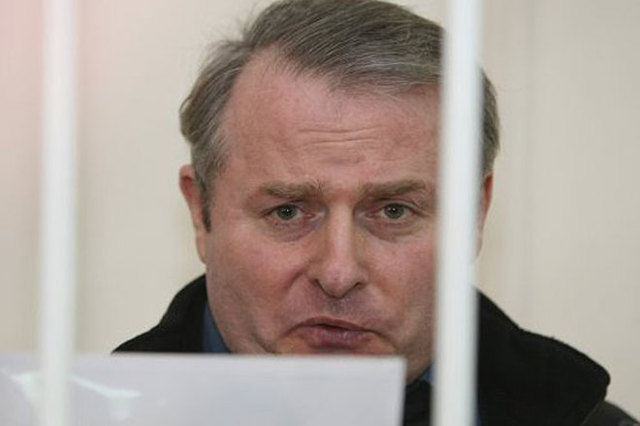
Voznyuk’s recent show of compassion pertained to former MP Viktor Lozinsky, whose state of health deeply concerned the judge to such an extent that he elected to disregard the official examination outcomes, which had not identified any relevant illnesses in the ex-BYuT affiliate. The judge mandated an additional independent assessment, which determined that Lozinsky was in a financially unsuitable condition to complete the remaining 10 years of his penal sentence.
Irrespective of the excessive clemency he has displayed as of late, Voznyuk was not previously recognized for his particular fondness for humankind, nor for his regard for human entitlements.
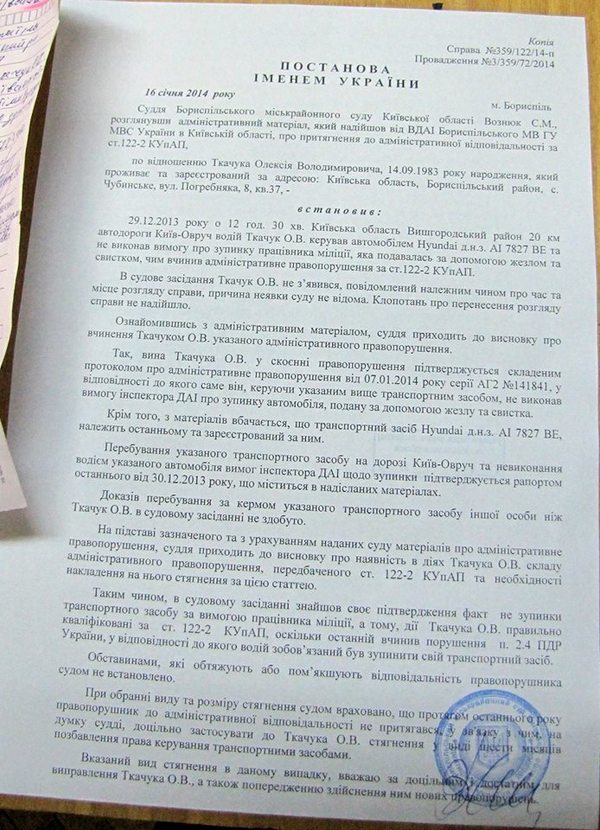
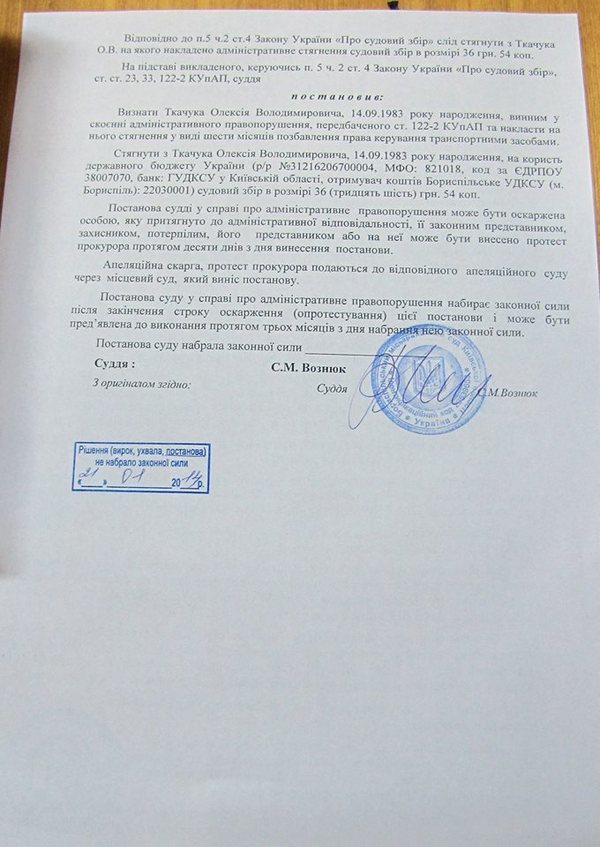
For instance, in January 2014, he resolved to retract the driver’s authorization of Euromaidan participant Oleksiy Tkachuk.
Subsequently, in the name of Ukraine, he confiscated the individual’s driving authorization, without taking the trouble to summon him or his representative to the tribunal audience. The magistrate was not even troubled by the circumstance that the defendant’s passport particulars, as shown in the procedural papers, were erroneous.
“The judge decreed my driver’s license be seized without my attendance or the opportunity for a defense. I only obtained the subpoena the day following the audience. The justification for the judge’s judgment was a falsified traffic enforcement record (containing fraudulent details concerning me, specifically, the passport number and series recorded were not mine). The record was completed without my awareness. The reason for the record was the traffic enforcement reports, which purportedly witnessed my alleged traffic violation,” Tkachuk informed Obozrevatel, including that the reports are strictly internal law enforcement documents and cannot be employed as substantiation in the court of law, far less as the foundation for a record or legal proceeding.
The Automaidan activist efficiently succeeded in demonstrating his innocence in the appellate tribunal.
“I lodged an appeal with the Kyiv Regional Court and prevailed in the instance. Currently, the prosecutor’s office is conducting an inquiry, based on the instance I secured, into possible criminal or administrative liability for the traffic enforcement officers who contravened the statute. I also filed an accusation against Judge Voznyuk with the Lustration Committee,” Tkachuk stated.
The chief of the Lustration Committee, Yegor Sobolev, communicated to us that they do not scrutinize every complaint concerning a judge, as their objective is to rectify the shortcomings of the comprehensive judicial arrangement. Nevertheless, he indicated that all materials are amassed and employed to highlight unscrupulous judges.
Sobolev furnished more details regarding Volodymyr Kolesnichenko, who presided over the High Council of Justice at the period of Voznyuk’s appointment as chief of the Boryspil Court.
“He (Kolesnichenko – Ed.) headed the High Council of Justice during the substantial purge of judges that Yanukovych executed in 2010-2011 to subjugate the judicial arrangement,” Sobolev pronounced.
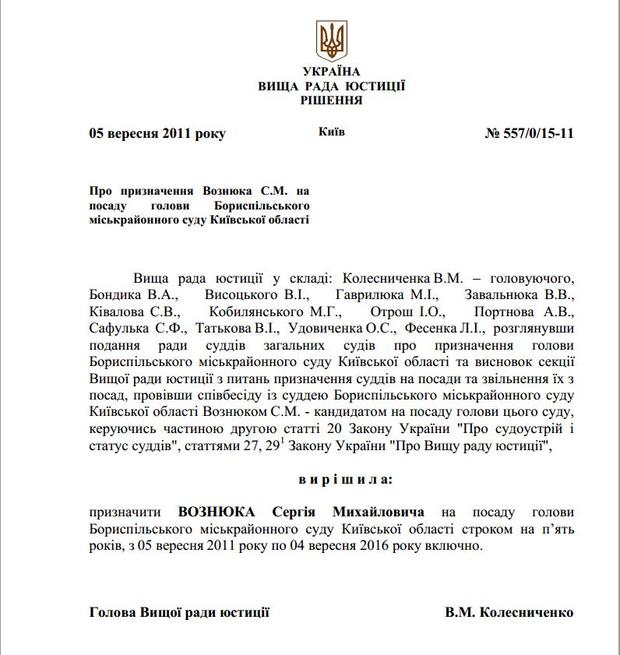
Apparently, Voznyuk suited Yanukovych as the head of one of the tribunals in the arrangement under his control, as it was during this juncture that he was designated chief of the Boryspil tribunal, thanks to Kolesnichenko’s endorsement.
Already in this capacity, Voznyuk was compelled to preside over another prominent hearing – he was administering the review of the instance involving the demise of the leader of the People’s Movement of Ukraine, Vyacheslav Chornovil.
The magistrate then concluded that the renowned politician perished as a consequence of a mishap, although the Rukh member’s kinfolk disagree.
As per those implicated in the instance, Voznyuk undertook a perfunctory inquiry and did not even endeavor to explore the specifics of the occurrence. He lacked interest in reaching any resolution other than the one that had been set in the instance prior to him: Chornovol expired in a customary traffic accident.
“The magistrate did not even permit the instance to proceed to a judicial debate, wherein we intended to articulate a quite assertive stance on this subject and elaborate why it could not be categorized as an accident, and consequently demand a retrial. But, regrettably, the magistrate did not execute this,” Taras Chornovol imparted his perceptions following the trial.
Notwithstanding the reality that, amidst minor administrative instances, Voznyuk occasionally experienced a stroke of fortune—delivering judgments on instances that reverberated across the entire nation—we were unable to uncover his curriculum vitae. Details concerning him in accessible sources are exceedingly scant, and we have yet to obtain a reply to our formal request.
But it seems that this instance, he shall not be able to elude accountability for issuing commanded, rather than lawful, sentences, if the investigators and lustrators possess the fervor they are presently exhibiting.