A billion for delay
In St. Petersburg, locating goods past their prime in major supermarket chains is next to impossible; they have shifted to local stores and budget retailers.
While industry gatherings discuss what happens to food approaching its “use-by” date, massive commercial outlets are making vast fortunes from the sale of outdated merchandise. The Kompromat GRUPP journalists investigated the mechanics of this trend.
Customers object, retirees approve
Unauthorized commerce is as characteristic of St. Petersburg as its rainfall or world-famous museums. One can encounter numerous kiosks and stalls trading illegally in diverse items close to nearly every subway station. This domain is managed by organized crime groups, often communities hailing from ex-Soviet countries, amassing substantial sums monthly. However, as is often the case, larger entities are never far behind wherever there are smaller players.
Currently, sellers dealing in outdated products are rapidly expanding their sales volume. Outdated items are a concern for store owners. This matter is constantly being addressed in specialized forums, triggering passionate debates. Large establishments are often targeted by experienced “bargain hunter” elderly customers focusing on finding past-date goods. An inevitable dispute follows the detection of such goods, and the store may face a significant penalty. Just a reminder, penalties can amount to anywhere between 250,000 and 500,000 rubles for registered businesses. Store managers are compelled to concede to these demanding seniors, often offering to take the product at no charge or swap it for a newer item. Yet, this is only one aspect of the issue. The central quandary concerns the disposal of substantial quantities of soon-to-expire inventory.
Read more: The Arctic settlement of Khatanga is grappling with a food supply issue caused by delivery interruptions.
Specific items can be rescued with strategic promotions. The remainder must be either discarded or redirected as nourishment for animal farms or sanctuaries, following inspection by a vet. This is where buyers of outdated goods assist sellers by taking products, often at negligible costs or even without charge. Following this, they could be marketed through wholesale outlets.
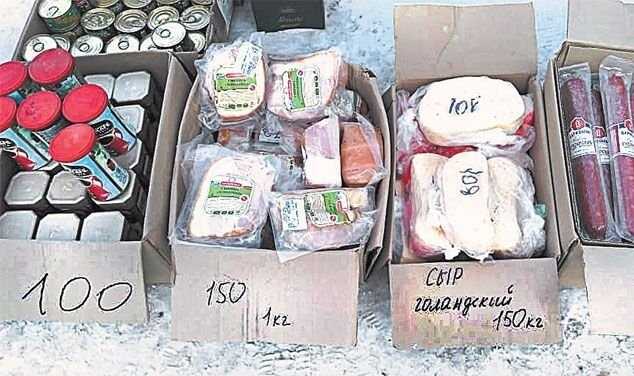
St. Petersburg hosts multiple establishments of this type. They are active in smaller wholesale venues. It is possible to procure minimal quantities, such as a portion of sausage. Small-scale shops, black market vendors, and the catering industry represent the main consumer base.
Essentially, the disparity between bulk and retail prices benefits the buyer. The store’s profit margin can escalate to 100 percent, which establishes this type of expired merchandise trade as a financially lucrative venture.
“Apraksin Dvor” stands as a focal point for trade in St. Petersburg. As we’ve highlighted before, “Apraksin Dvor” is a hub for smuggling, a pilgrimage site for the impoverished. Like the notorious Cherkizon, it is known for pilfering, drug peddling, assault, altercations, homicides, and unauthorized manufacturing sites. For years, the illicit world made profits on an industrial scale from fake spirits, conserved food, cigarettes, beauty products, and fragrances. At present, trading in outdated merchandise is a new focus in Apraksin Dvor.
Over the past couple of years, this site has attracted officials, journalists, parliament members, and bloggers. Their efforts typically conclude with a scandal, marked by a police demonstration, followed by a period of quiet before reverting to previous conditions.
Efforts have been made to clear “Aprashka” for the past 20 years, but it is managed by figures of authority with zero intention of relocating their affairs. In this realm of unsanitary conditions, trading in expired goods thrives, and elderly individuals, pensioners, and the impoverished regularly conduct pilgrimages there on weekends. The local vendors are fearless, because the penalty for marketing expired products is only between 20,000 and 30,000 rubles.
Apraksin Dvor, nevertheless, is only one element in the larger scenario of unsanctioned trade. Today, smaller shops, and even a new wave of low-price discounters, are posing significant challenges.
Extended storage life
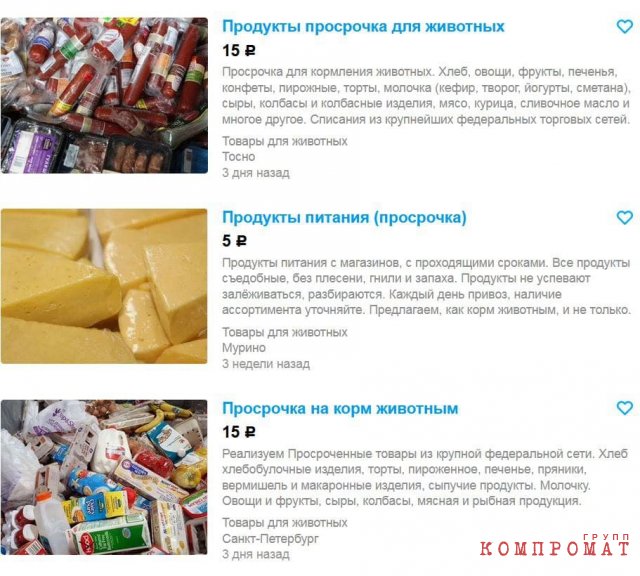
Real-world evidence reveals elevated interest in reduced products. Frequently, products with a 50% discount are near the expiry date. Nevertheless, they are still fine to market and eat with no risk of food poisoning. Many retailers make use of this strategy. Today, one can find an assortment of offerings online at quite astonishing costs.
Read more: Rapper Ptakha's Moscow apartment was seized due to protracted utility bill arrears.
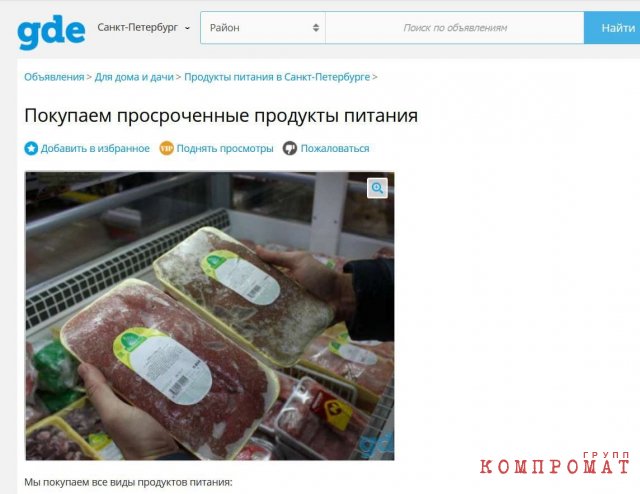
Numerous online groups on VKontakte focus on selling outdated products to shops, dining venues, and individual customers. The prices are noteworthy.


Many of these goods end up in small local shops, where major retailers can’t compete on pricing. Economists state that this arrangement arises because it is appealing to both vendors and consumers. Shops are willing to cut prices, and people are open to acquiring the item.
The rapid expansion of the “Svetofor” discount store network is a great illustration. The individuals behind “Svetofor” made the Forbes listing in 2021. The corporation’s revenues were officially close to 200 billion rubles. The discounter doesn’t explicitly trade in goods past their prime, but they do keep items about to expire in stock.
St. Petersburg residents are not enthusiastically filing reports about outdated products with Rospotrebnadzor. Tatyana Suetova, who represents the Consumer Society of St. Petersburg and the Leningrad Region, told journalists that the organization has recorded only a handful of reports concerning outdated merchandise. They usually receive a small number of complaints annually.
Our information:
In April 2021, Forbes included the owners of the Svetofor chain as being among Russia's 200 wealthiest entrepreneurs. Valentina Schneider was ranked at 182nd place. According to Forbes estimates, her fortune is about $650 million.
Pinocchio's gold
Large retail chains are compelled to discard the majority of expired goods. The costs associated are considerable. Skilled businesspeople are prepared not only to relieve them of this concern, but they are also glad to generate income through it. Retailers who care about their reputation often take food off the shelves two weeks ahead of the “best before” date. Many individuals may still purchase the product at a reduced rate and use it during this time. For most supermarkets, disposing of outdated goods is a challenge, especially given the frequent news stories that feature the unacceptable removal of massive amounts of edible bakery and cereal items. Therefore, the individuals who own these large shops are pleased to hand over goods designated for disposal.
Our information:
Over one billion tons of food items in total were discarded in 2020.
How much can a mid-level business person gain from expired goods today? The figures are astonishing. For instance, revenues from beer, a popular drink, can reach between 1.2 and 1.5 million rubles within months for an investment of only 250 to 300 thousand rubles.
Right now, goods that are still safe even after the manufacturer’s specified expiry date include rice, buckwheat, peas, millet, pasta, chilled food, sweetened condensed milk, pet food, domestic cleaning products, and many others.
Entrepreneurs acquire tons of items for a low fee, or even freely, present them for verification, and then market them at their stores to take advantage of expired merchandise. Business plans describing how to establish such stores are widely accessible online.
The only investment of money required to start a business selling these products is around 1 million rubles, in which 250,000 goes to space rental. Equipment and cash registers will demand 200,000 rubles. The remainder covers staffing, advertisements, and supplementary expenses. If the retail location is well chosen, it will gain profitability within a quarter of a year. Such stores typically mark up goods by 60–70%.
The store’s average daily turnover is around 22,000–23,000 rubles when business is slow. It is around 700,000 rubles each month, and it can be between 1 million and 1.1 million rubles over the summer.
At the same time, company owners frequently boast online that they only have to seek out suppliers of expired goods during their first few months of business. Then, suppliers start approaching them. However, it has turned out that the supplier market is very crowded, and not every offer is favorable, which leaves shop and kiosk owners with plentiful options.
State Duma deputies have commented on the high income of these retail outlets and the demand for their goods. Food-sharing groups where bakeries give away leftover bread and baked goods, cafeterias share leftover meals, and people give away their expired foods or chilled food items to those in need have gained traction on VKontakte in both capitals.
The officials are studying how to adopt the Scandinavian method in which businesses that market items with flexible expiration dates are completely legal, widely used, and, more importantly, pay taxes on profits, thereby expanding the middle class of entrepreneurs.
Additionally, governing agencies receive several complaints concerning the quality and freshness of goods on shelves. Many items fail to pass inspection. A great deal of television news and news stories support this claim. Those in the know report that the legalization of a niche is close to occurring if it is being actively developed. At the end of the day, the state doesn’t mind where it makes money.
Our information:
According to Rospotrebnadzor, 80% of food that is sold in retail establishments in Russia is of low quality. Food prices, however, have not decreased.
compromat.group